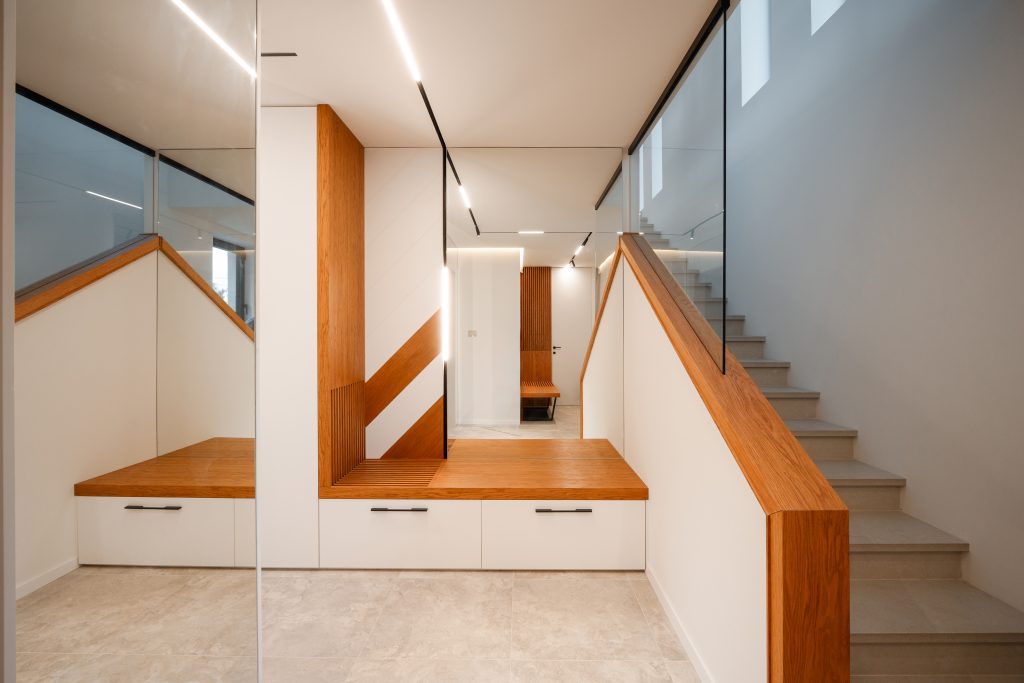
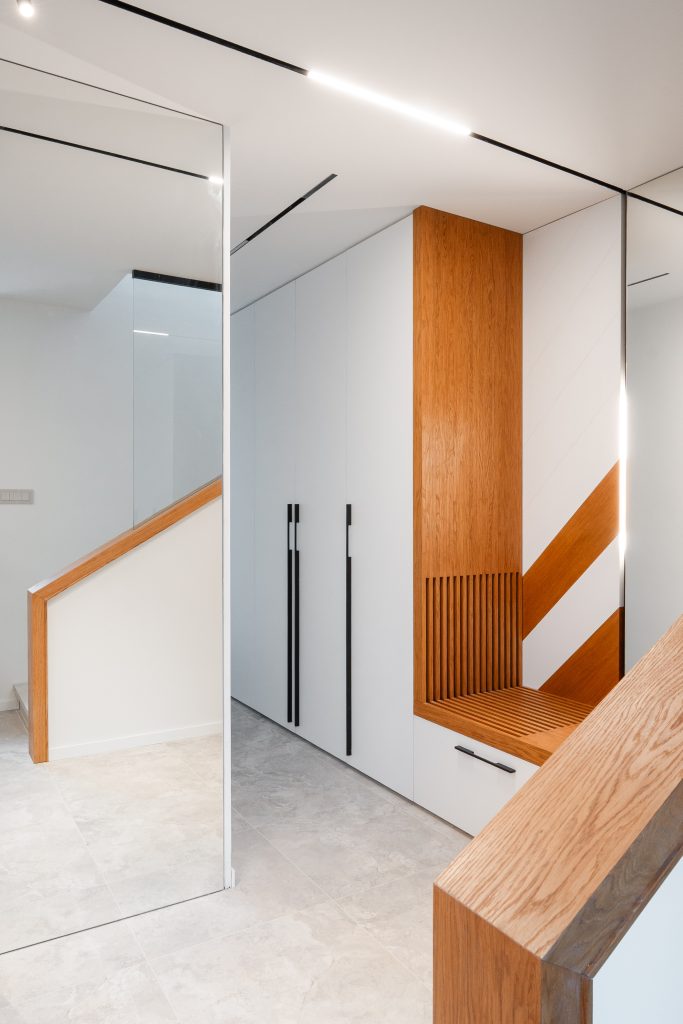
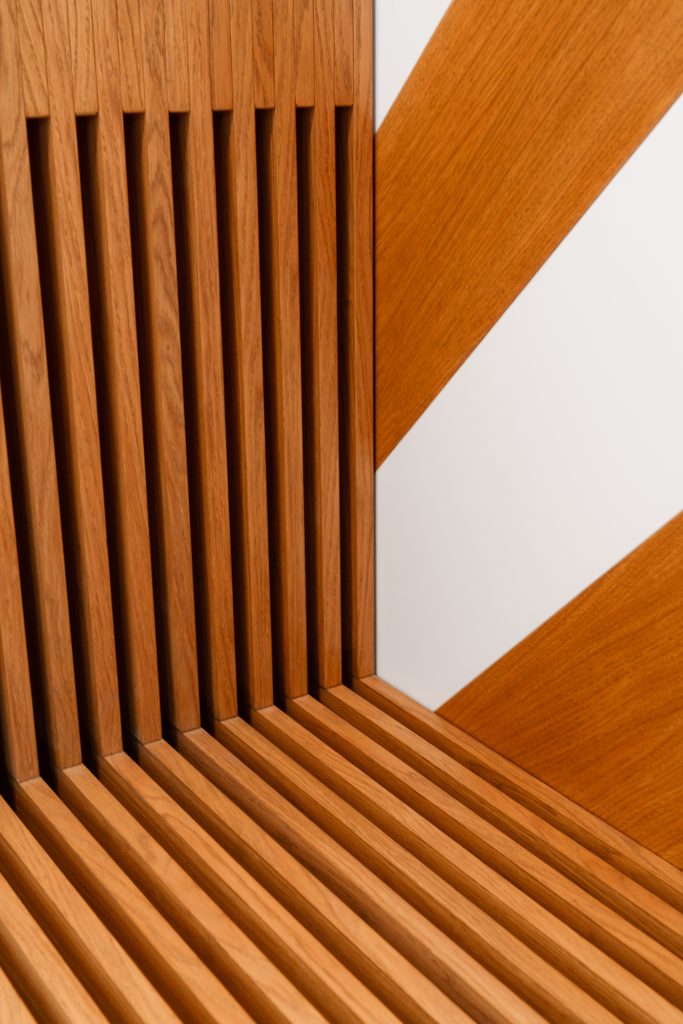
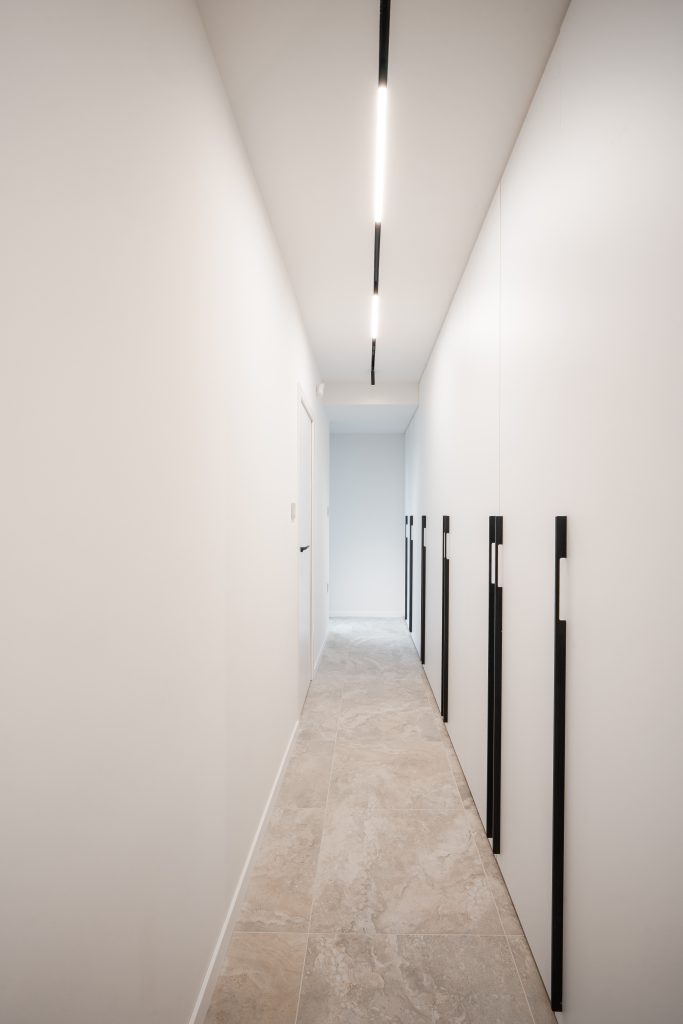
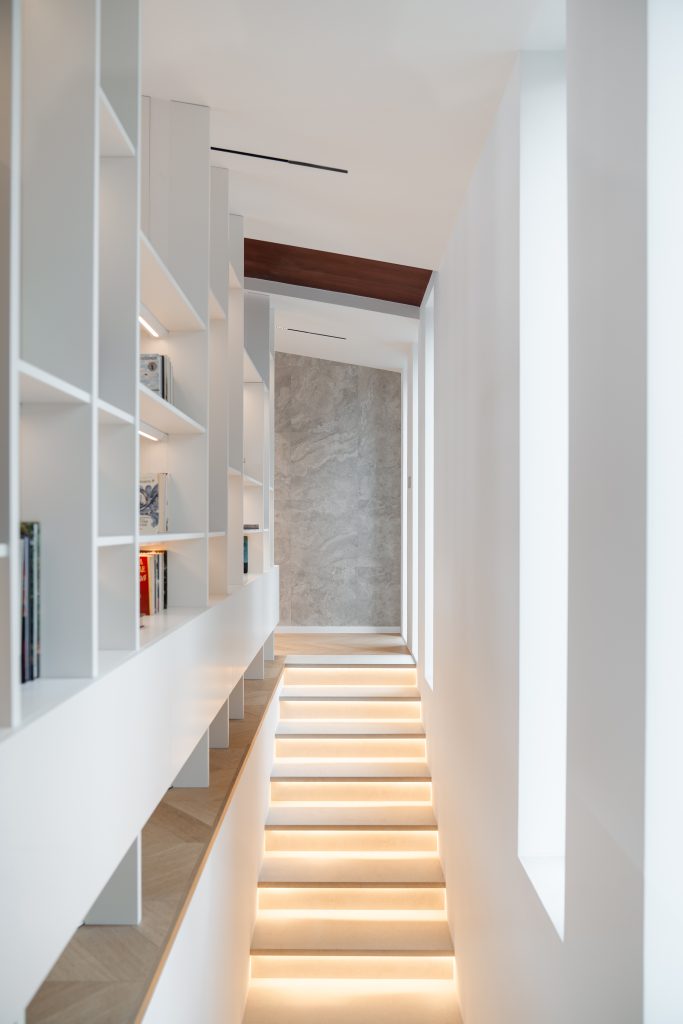
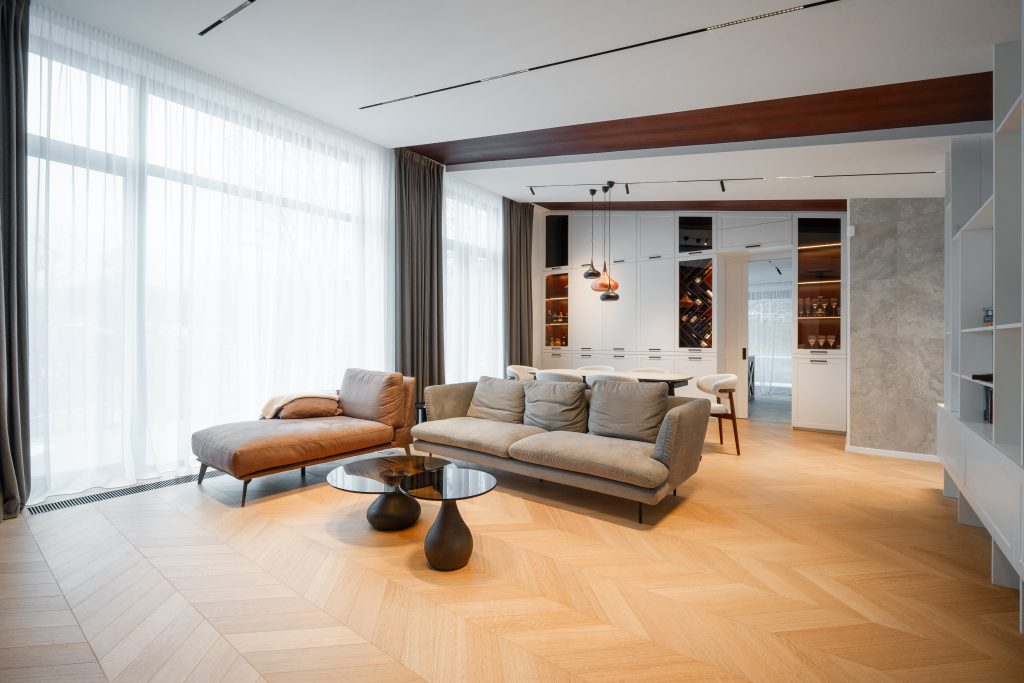
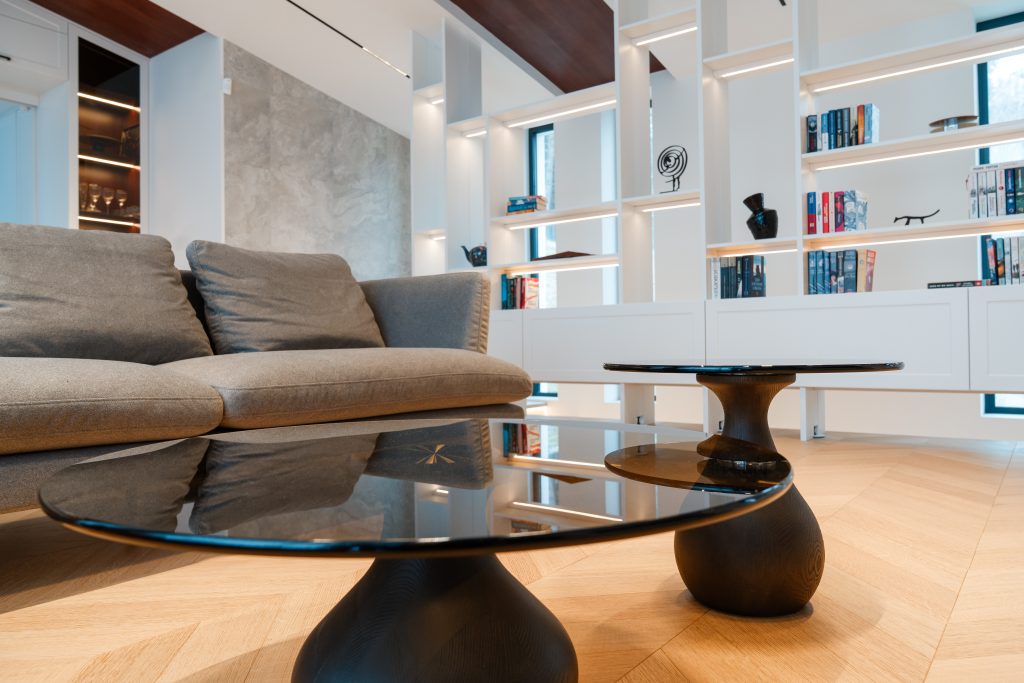
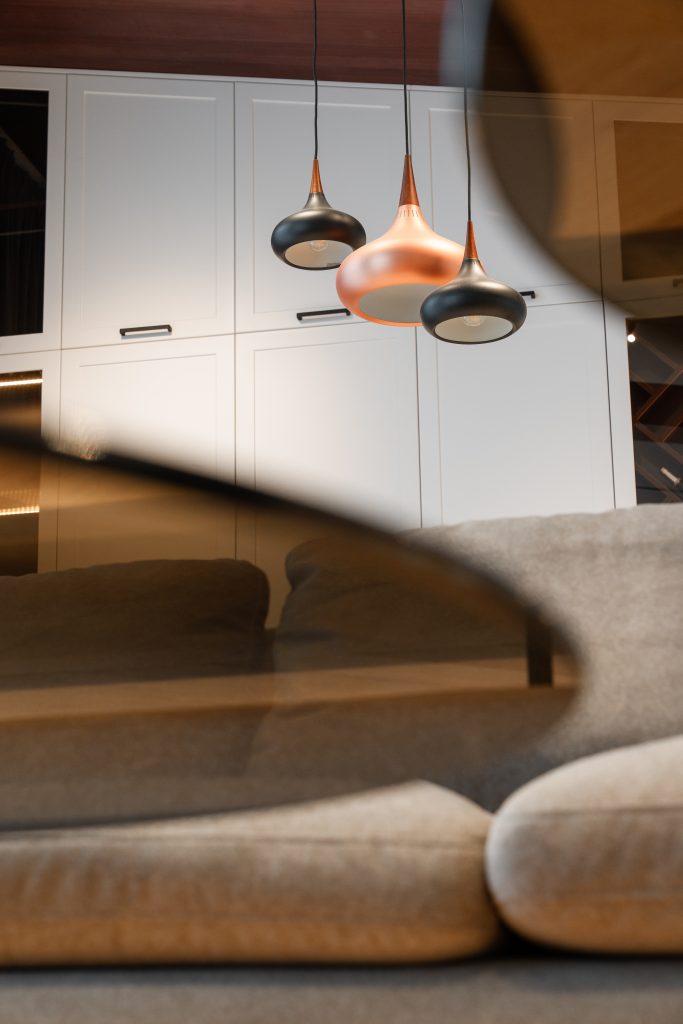
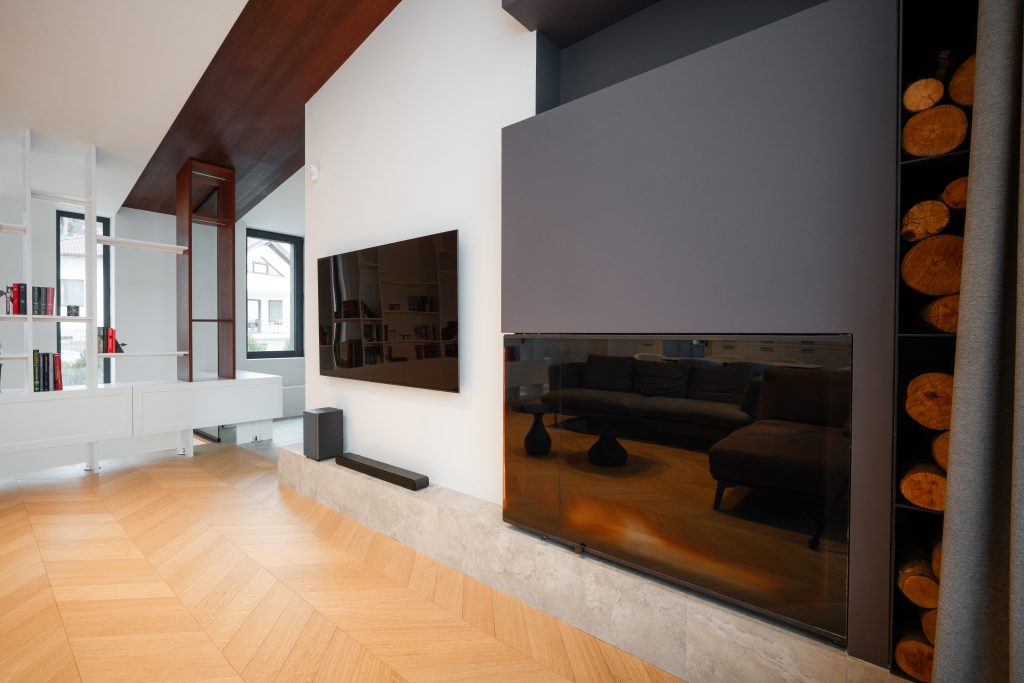
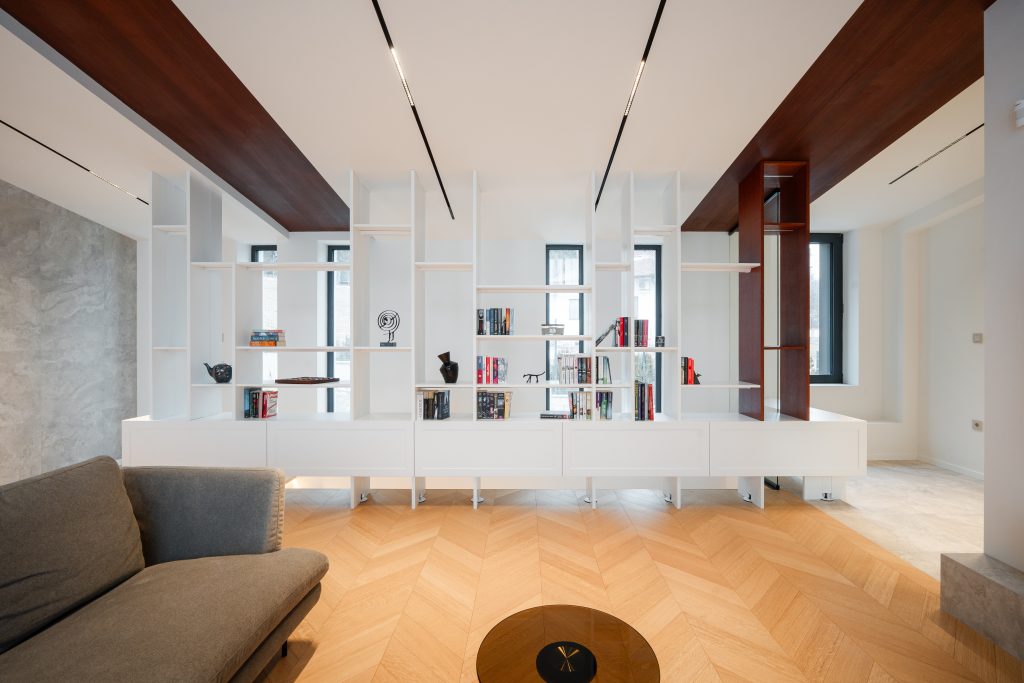
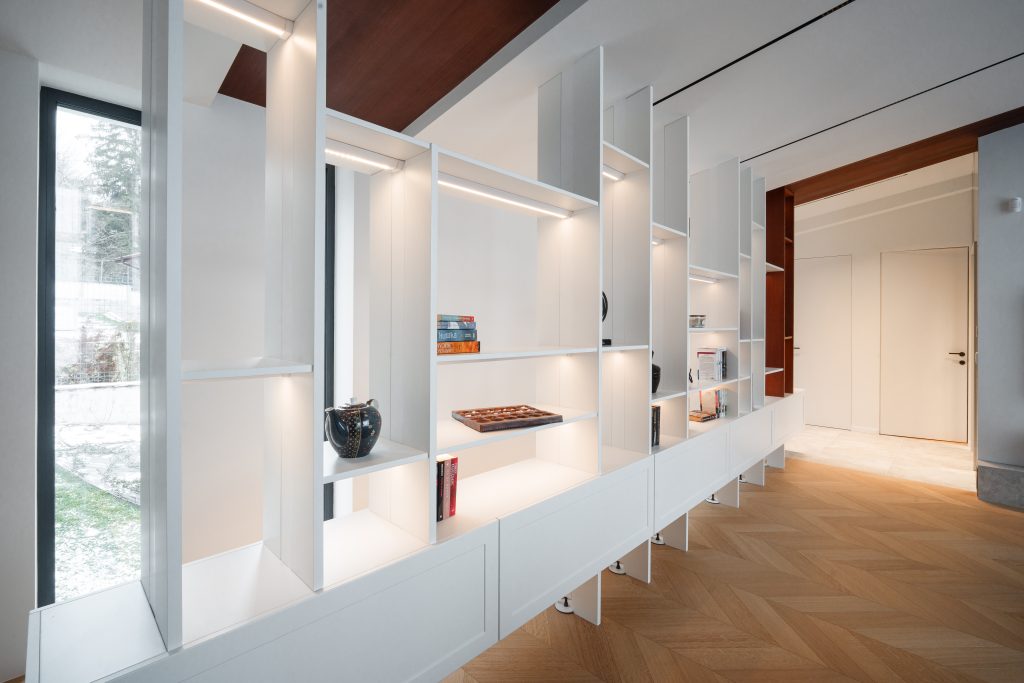
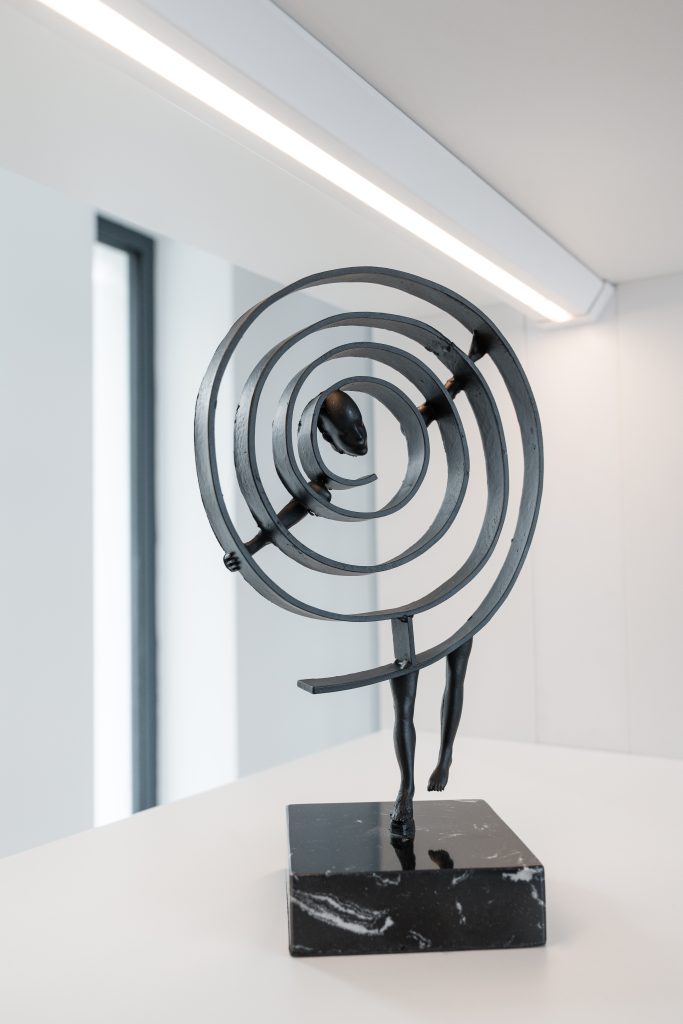
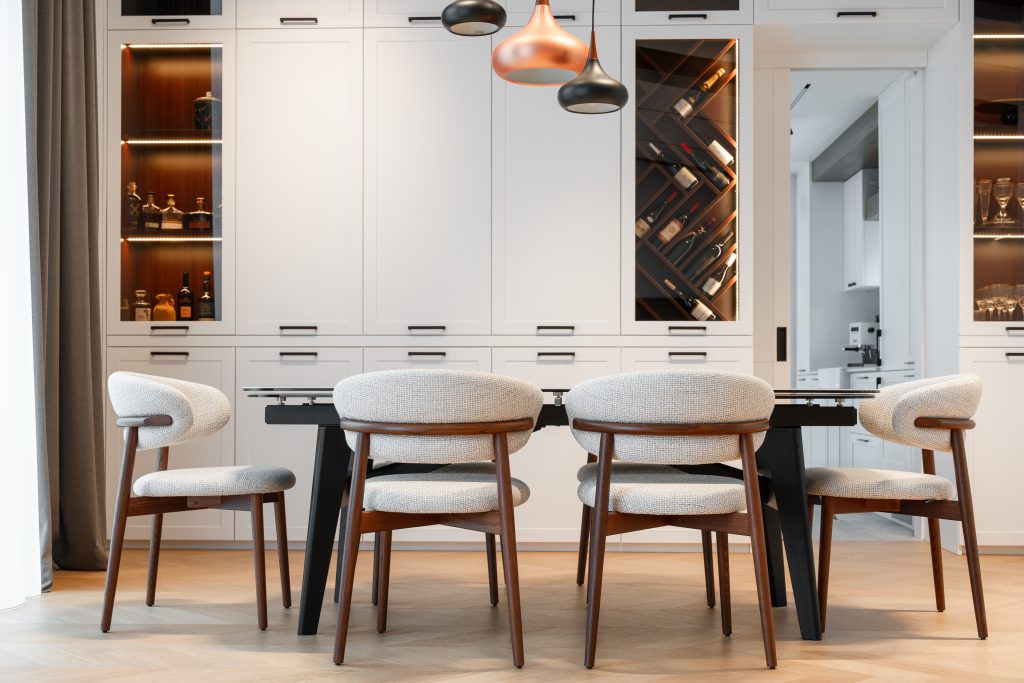
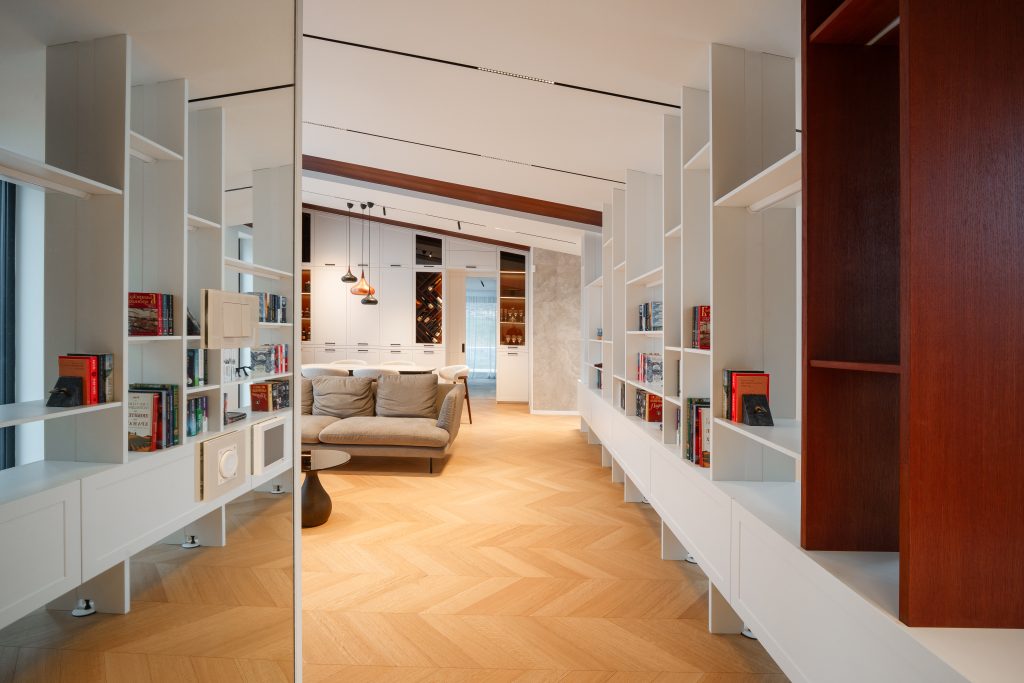
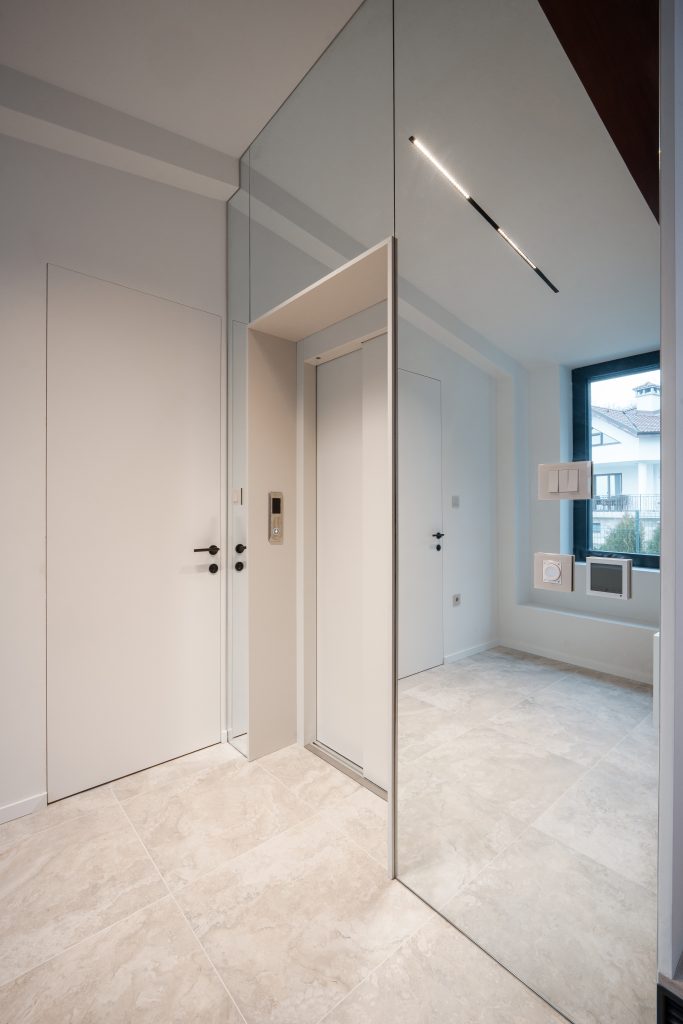
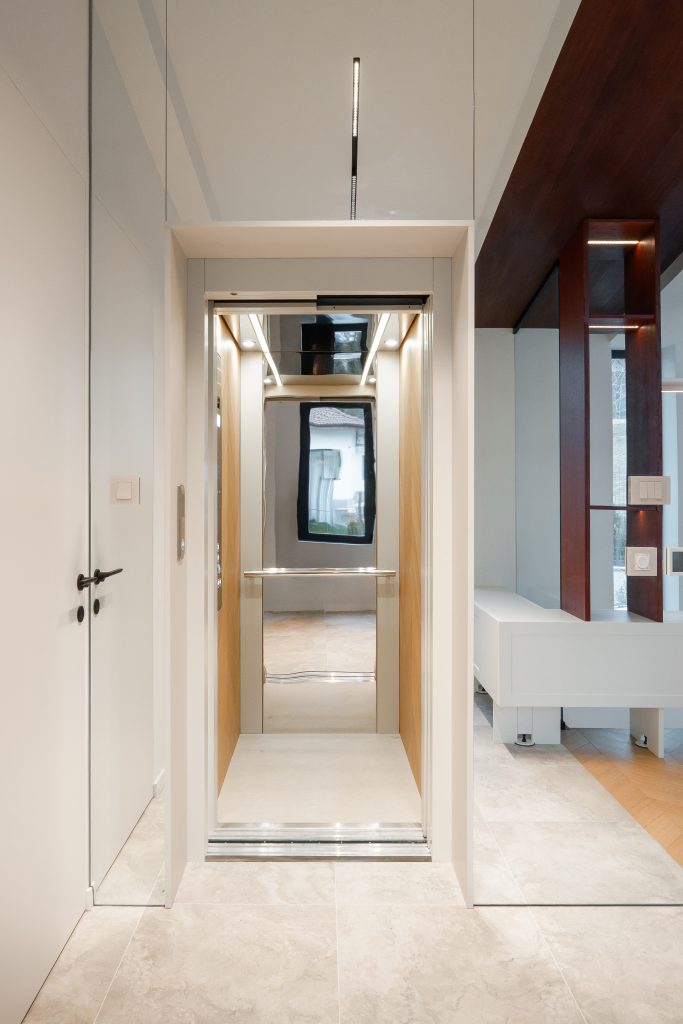
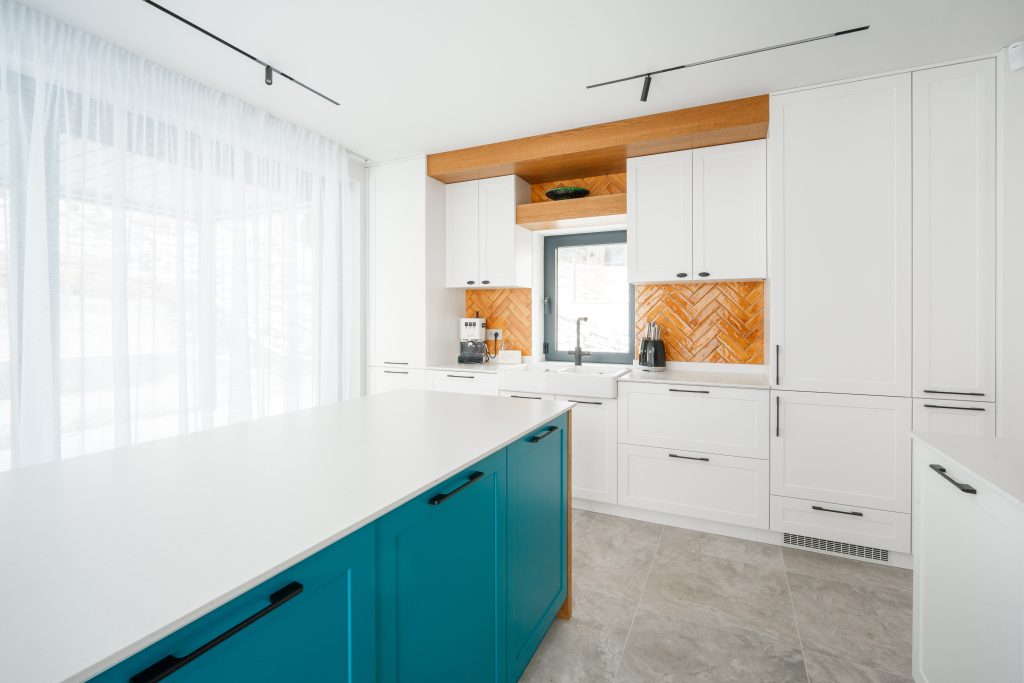
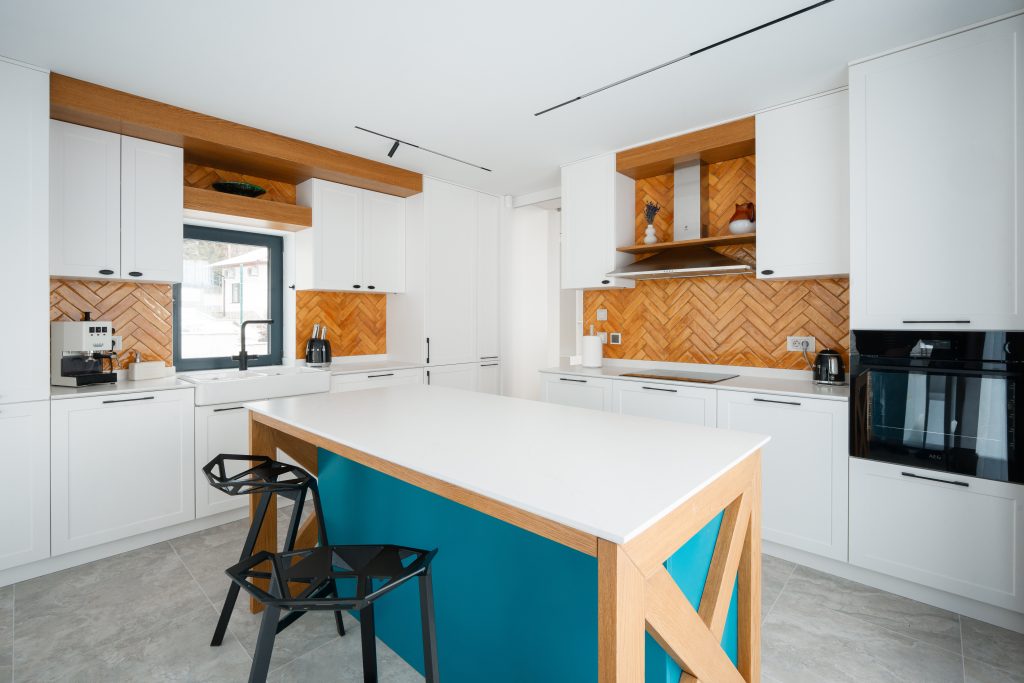
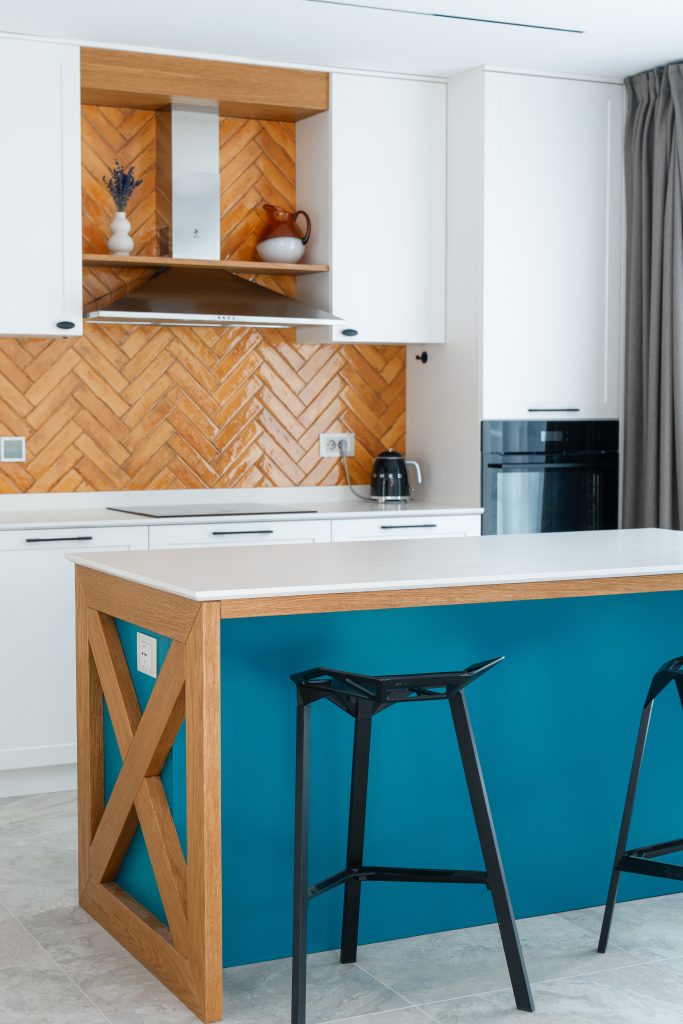
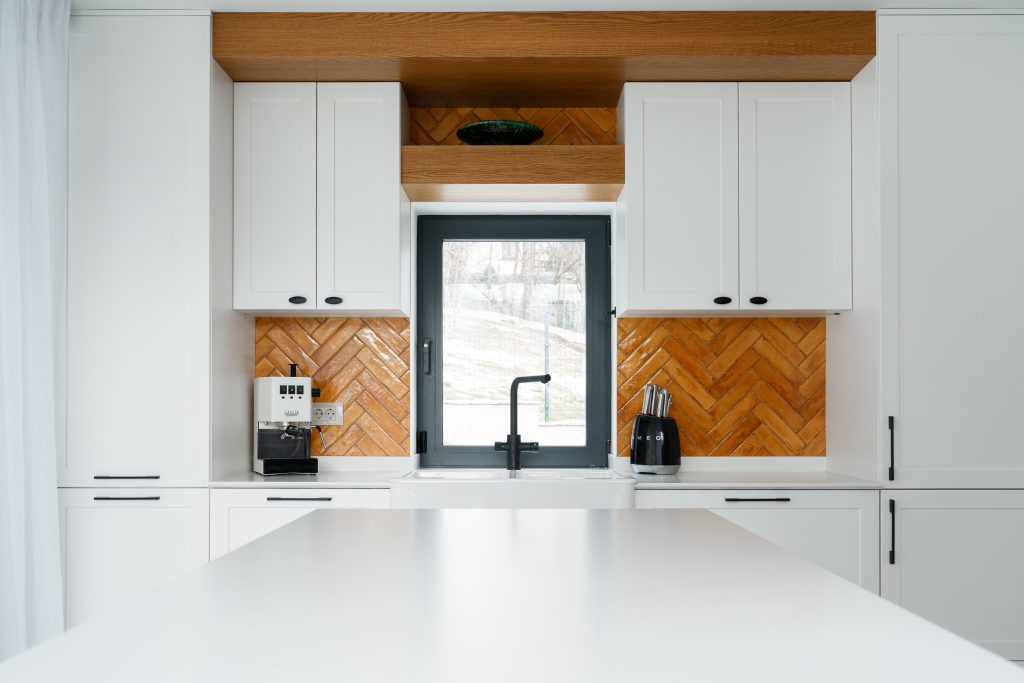
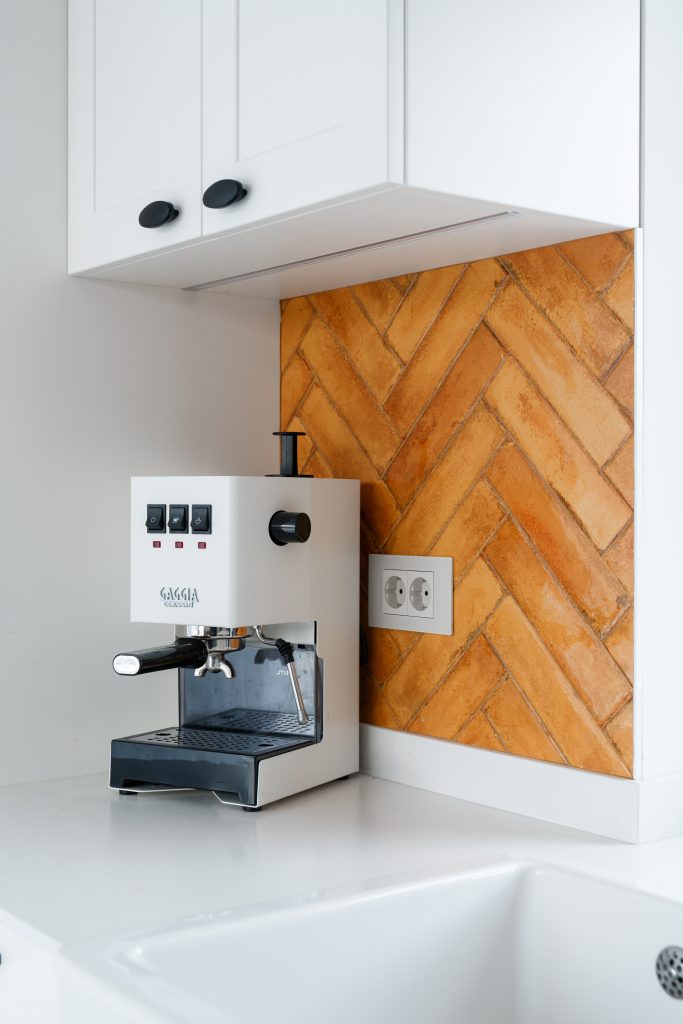
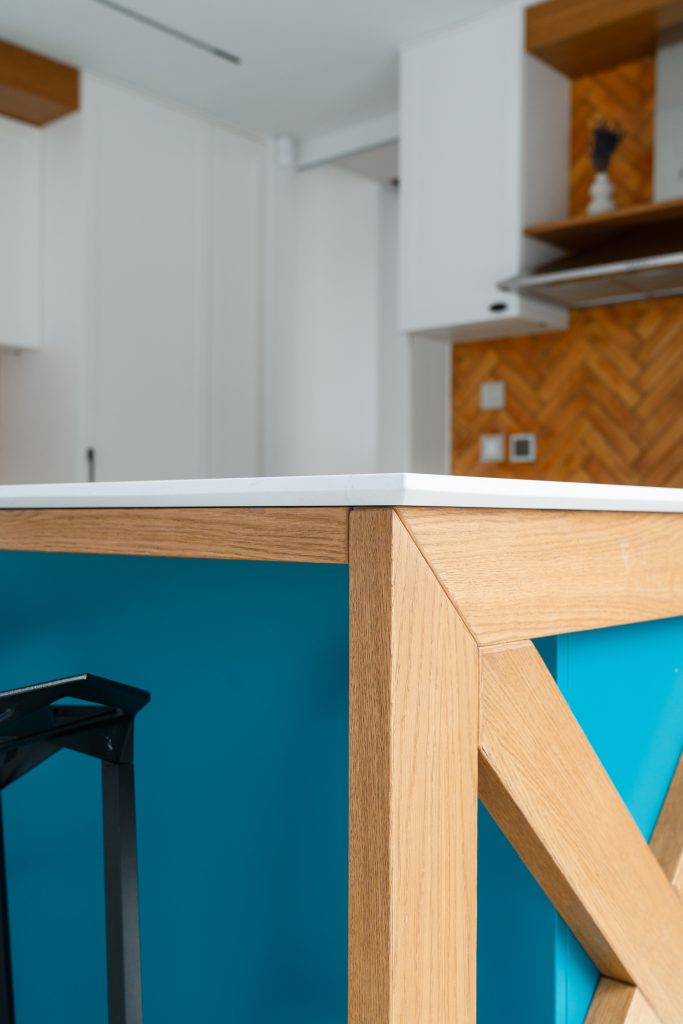
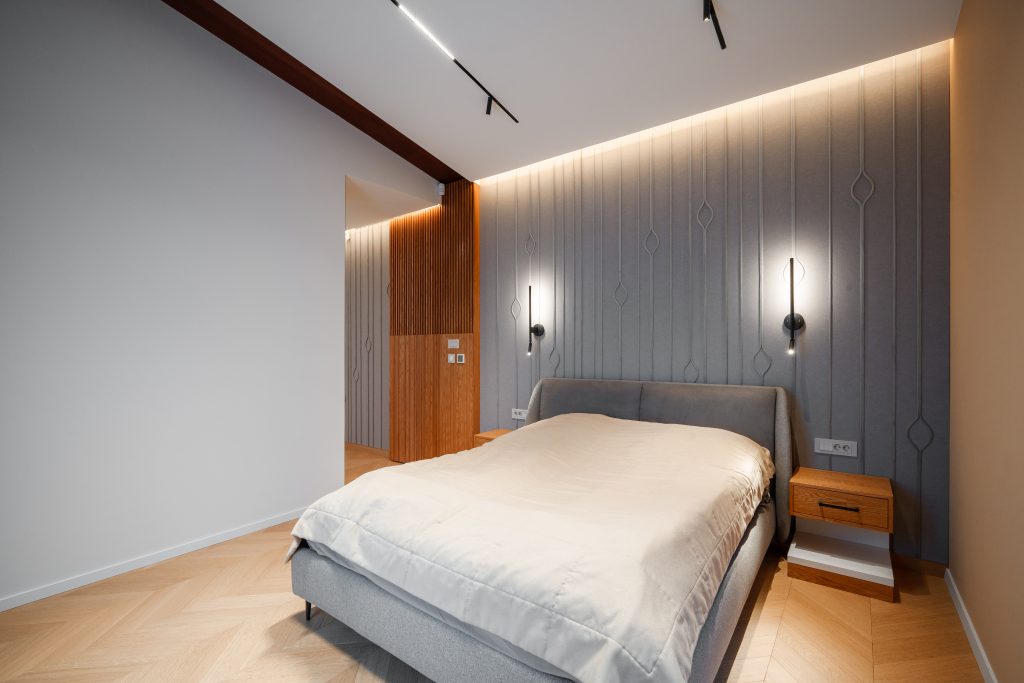
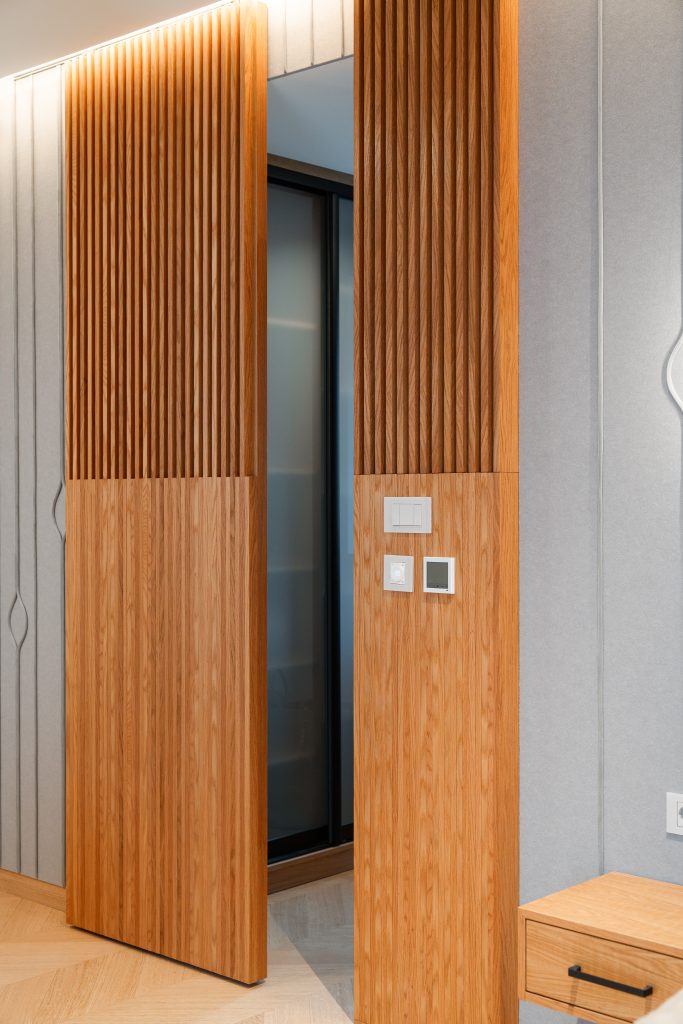
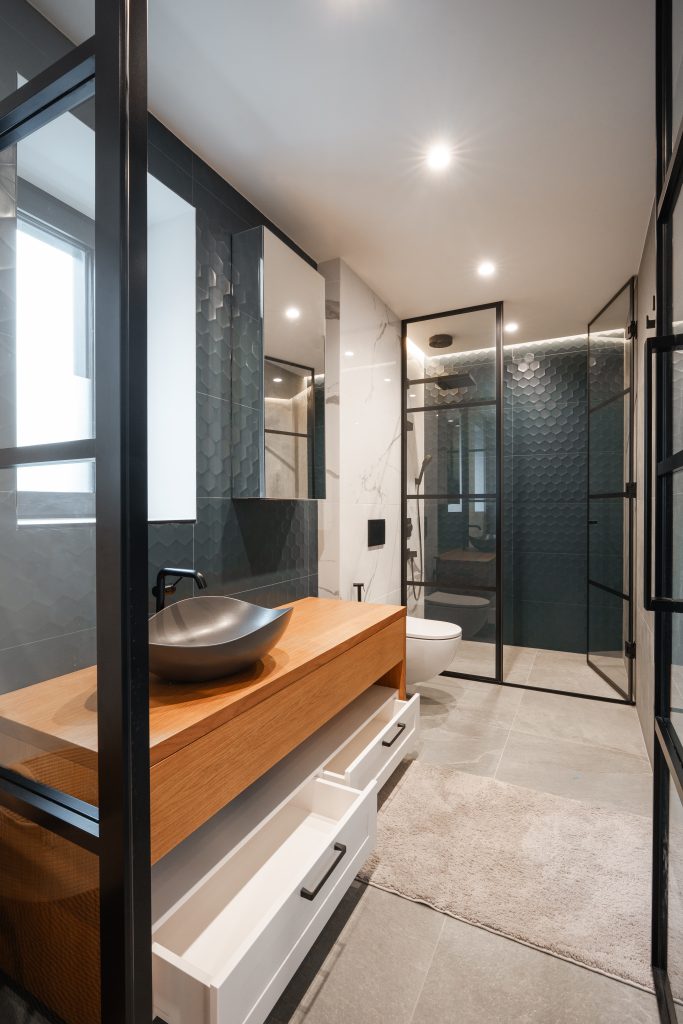
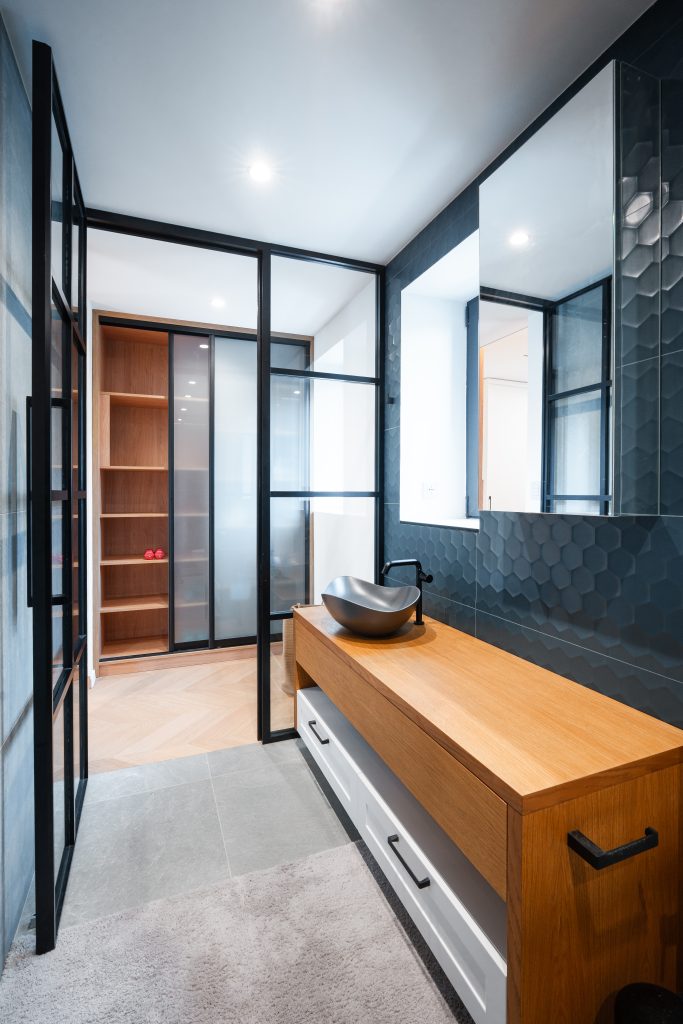
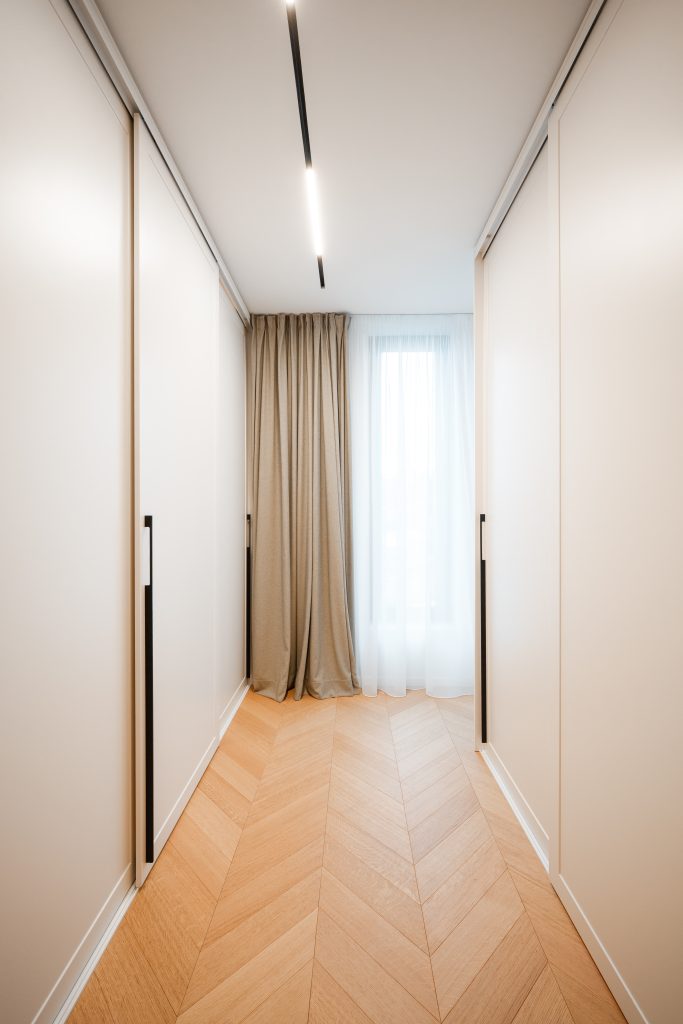
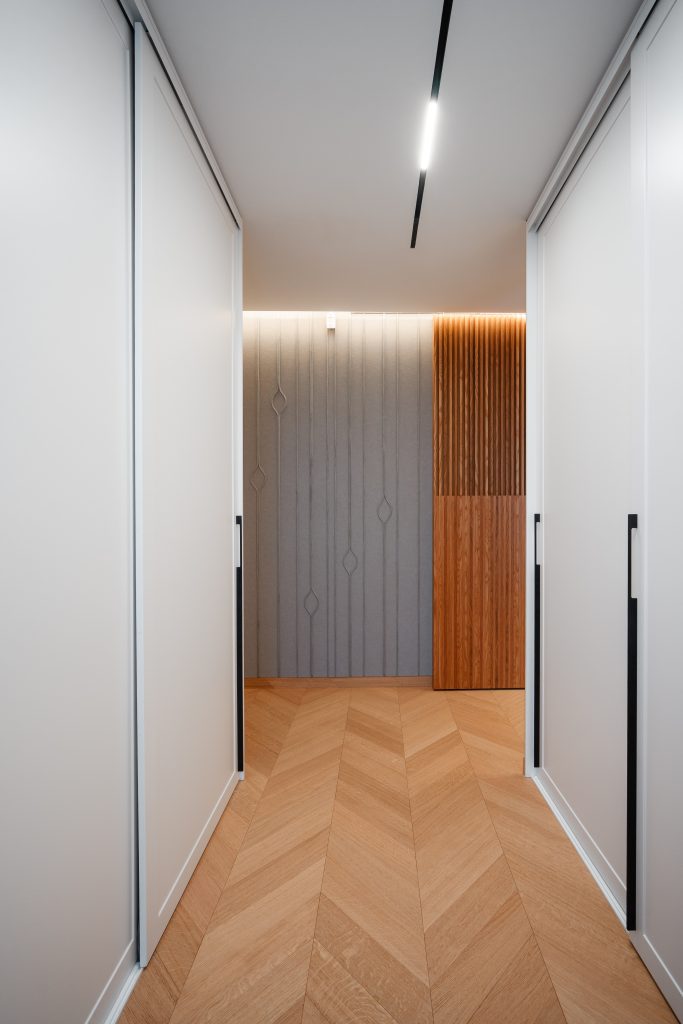
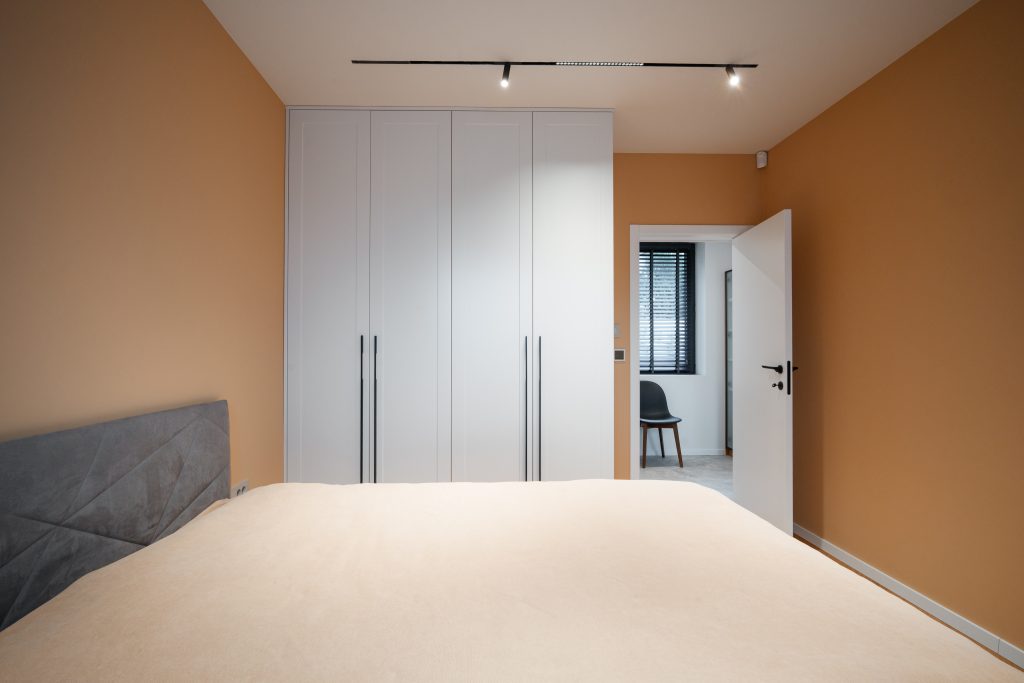
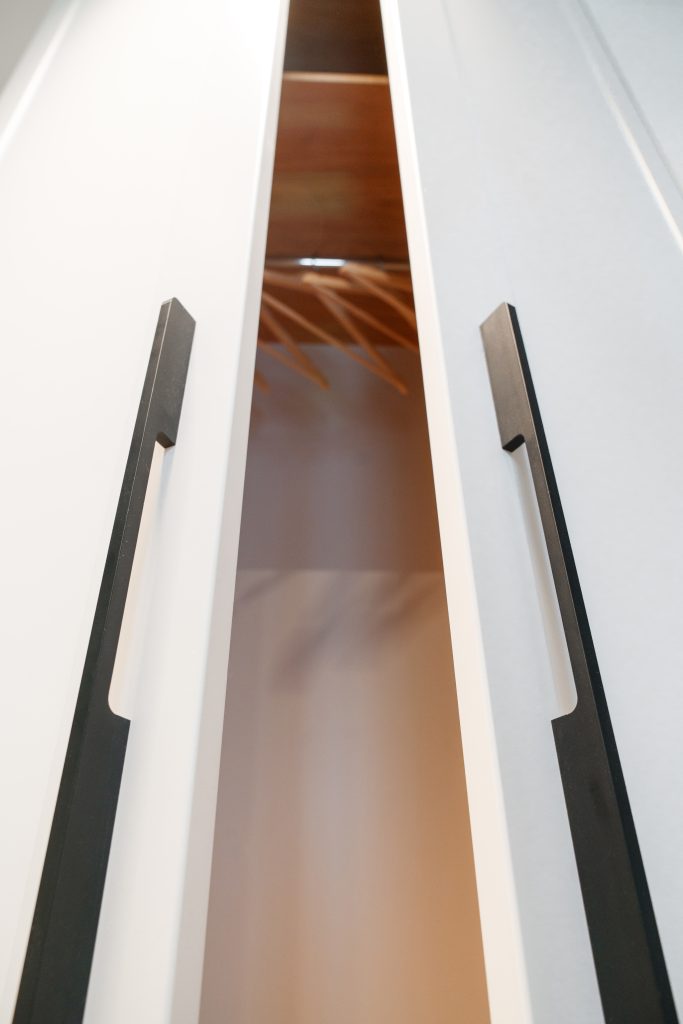
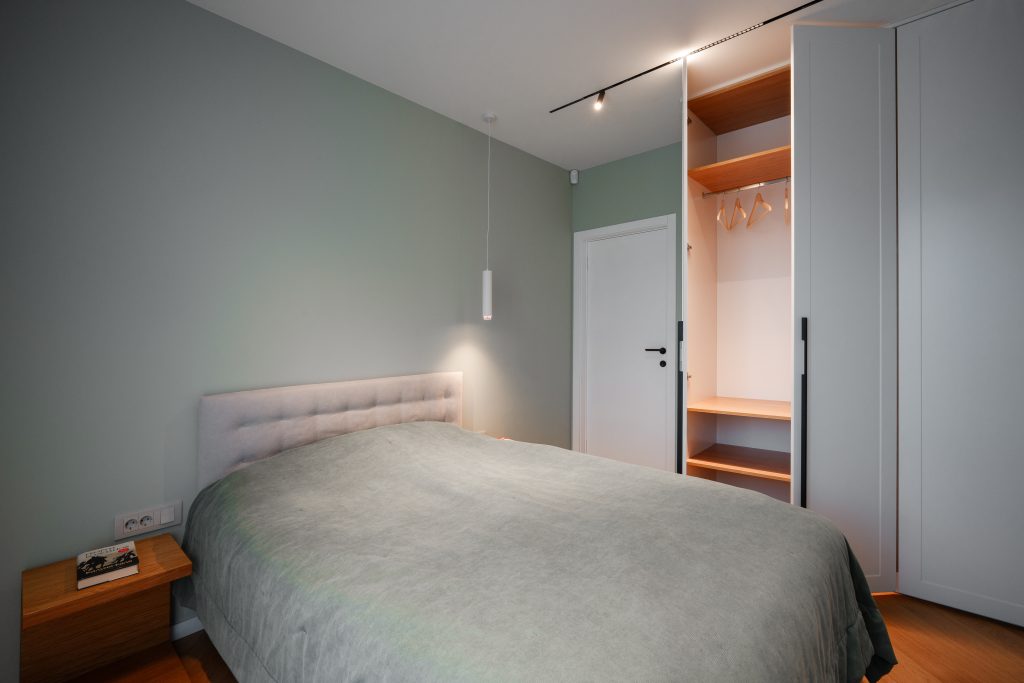
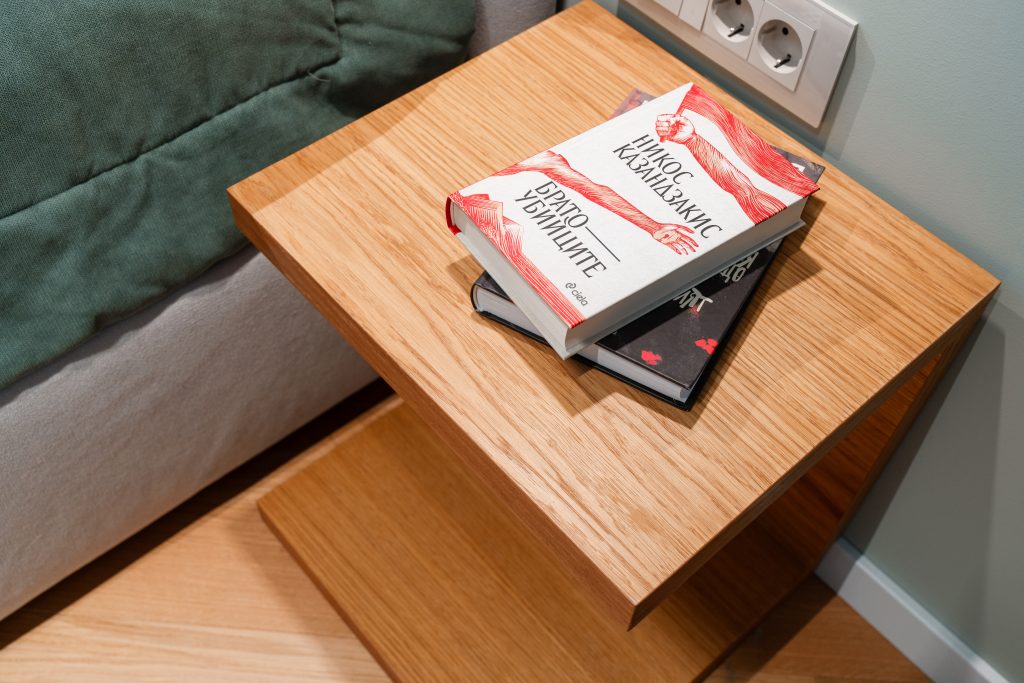
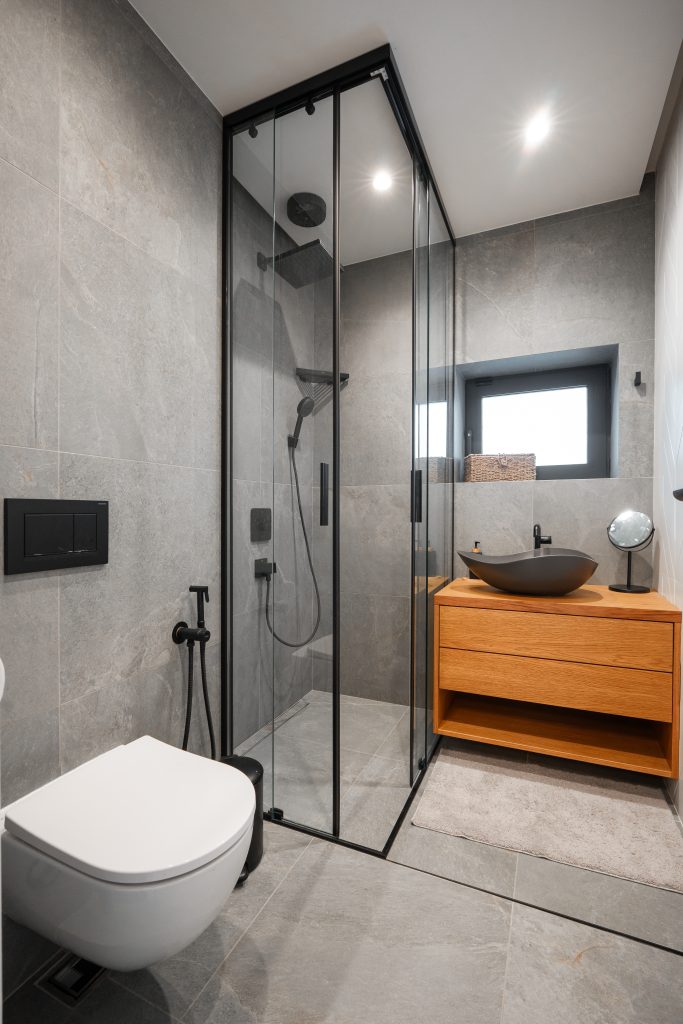
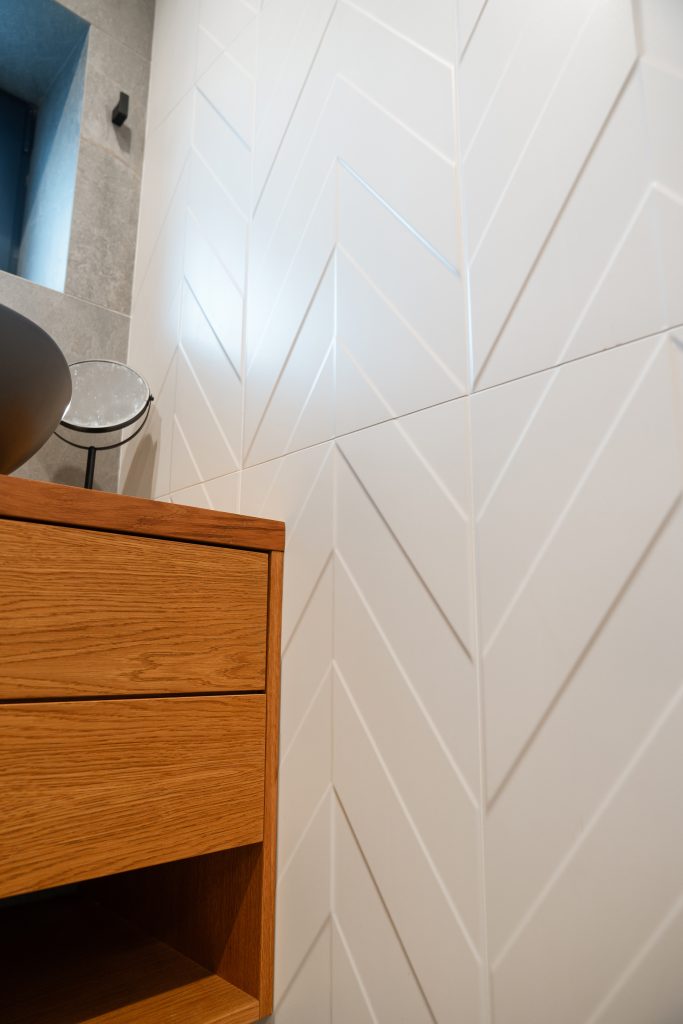
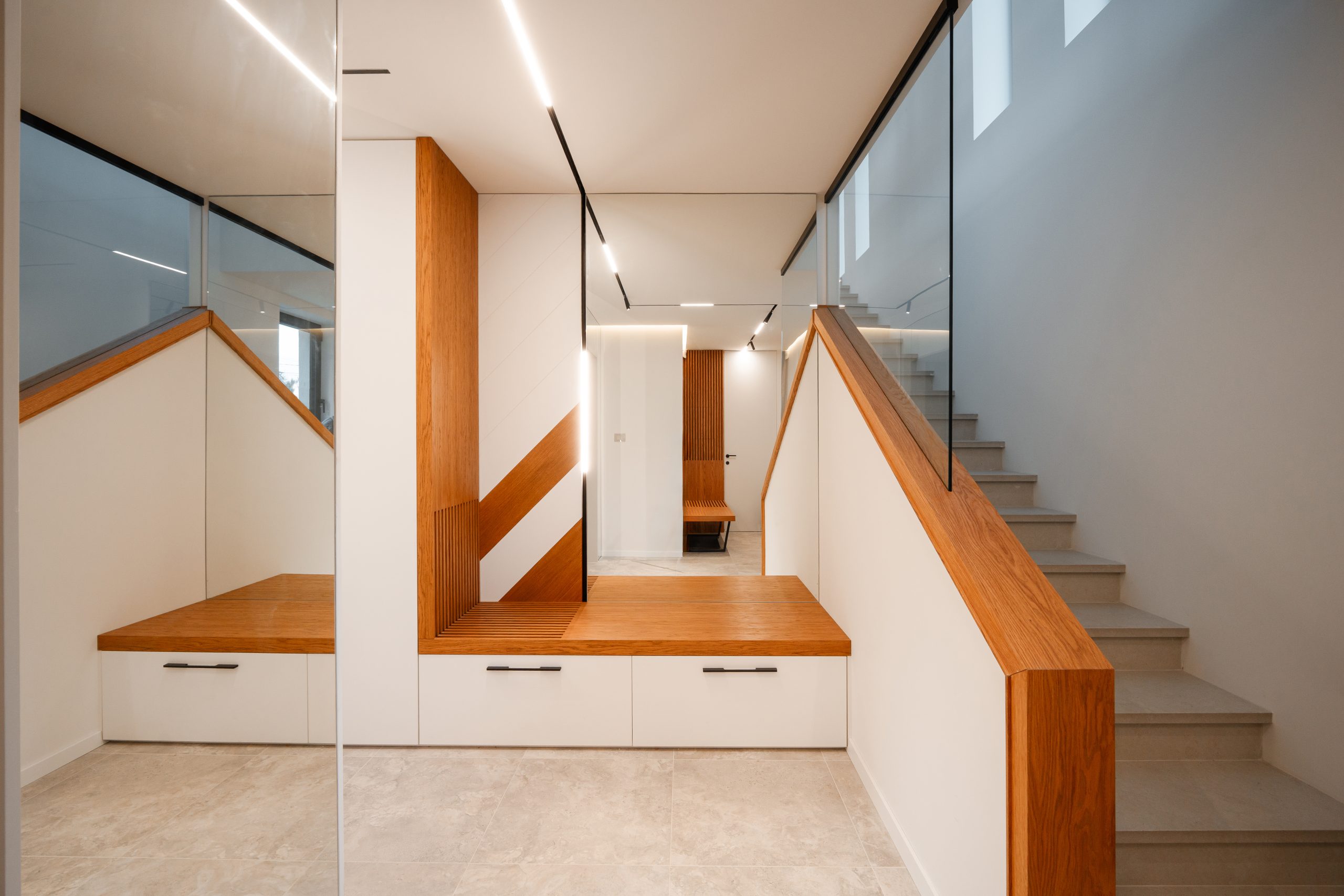
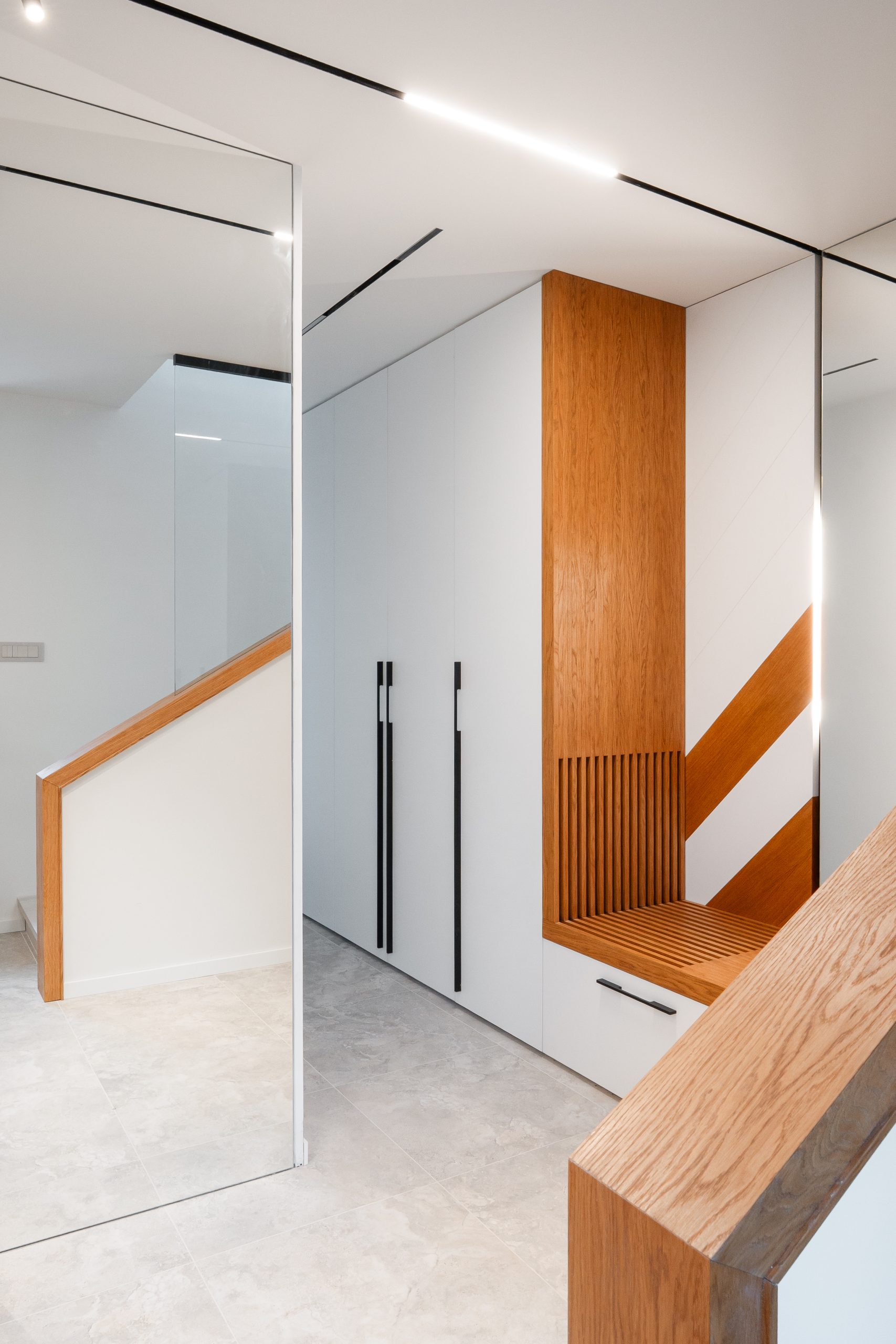
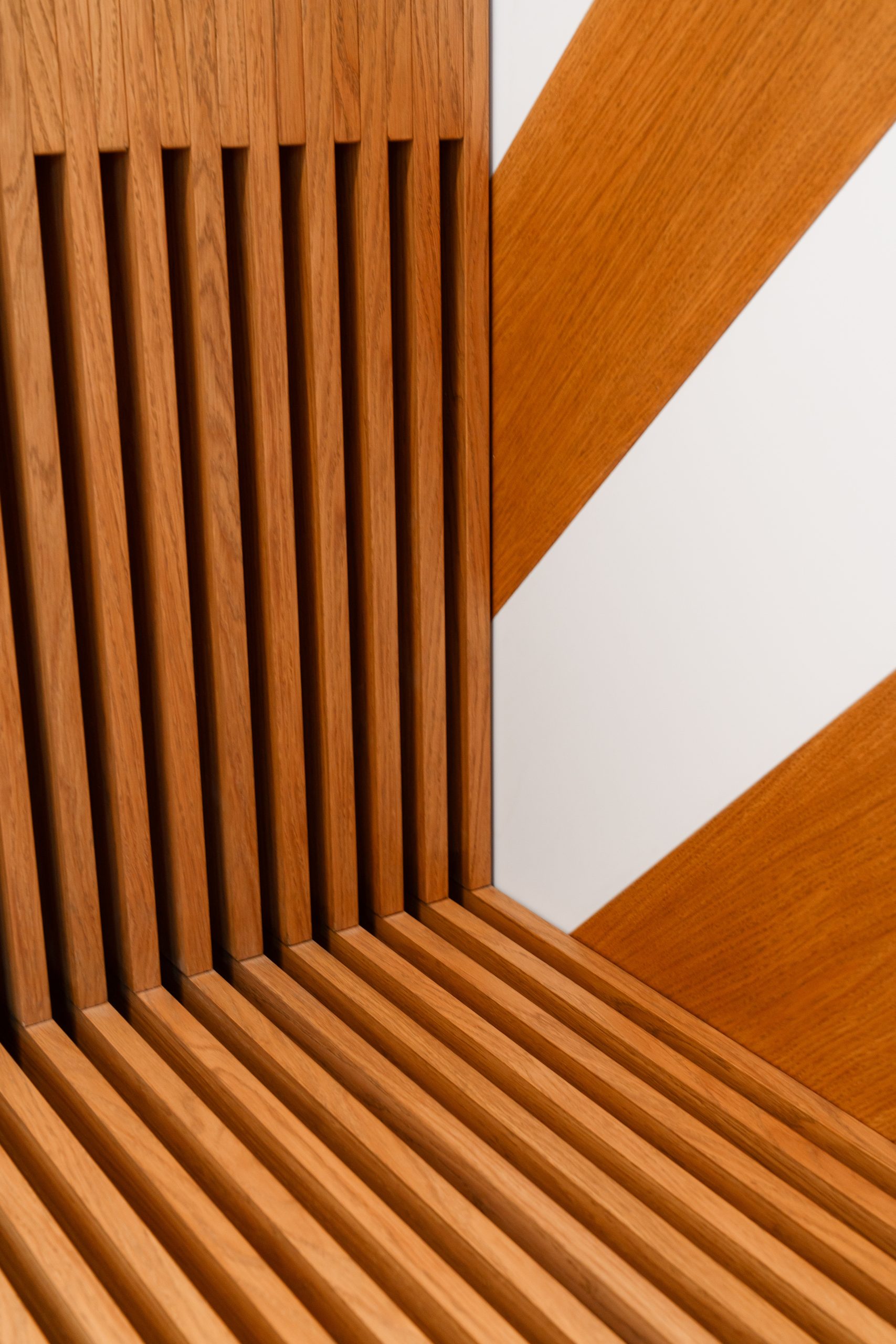
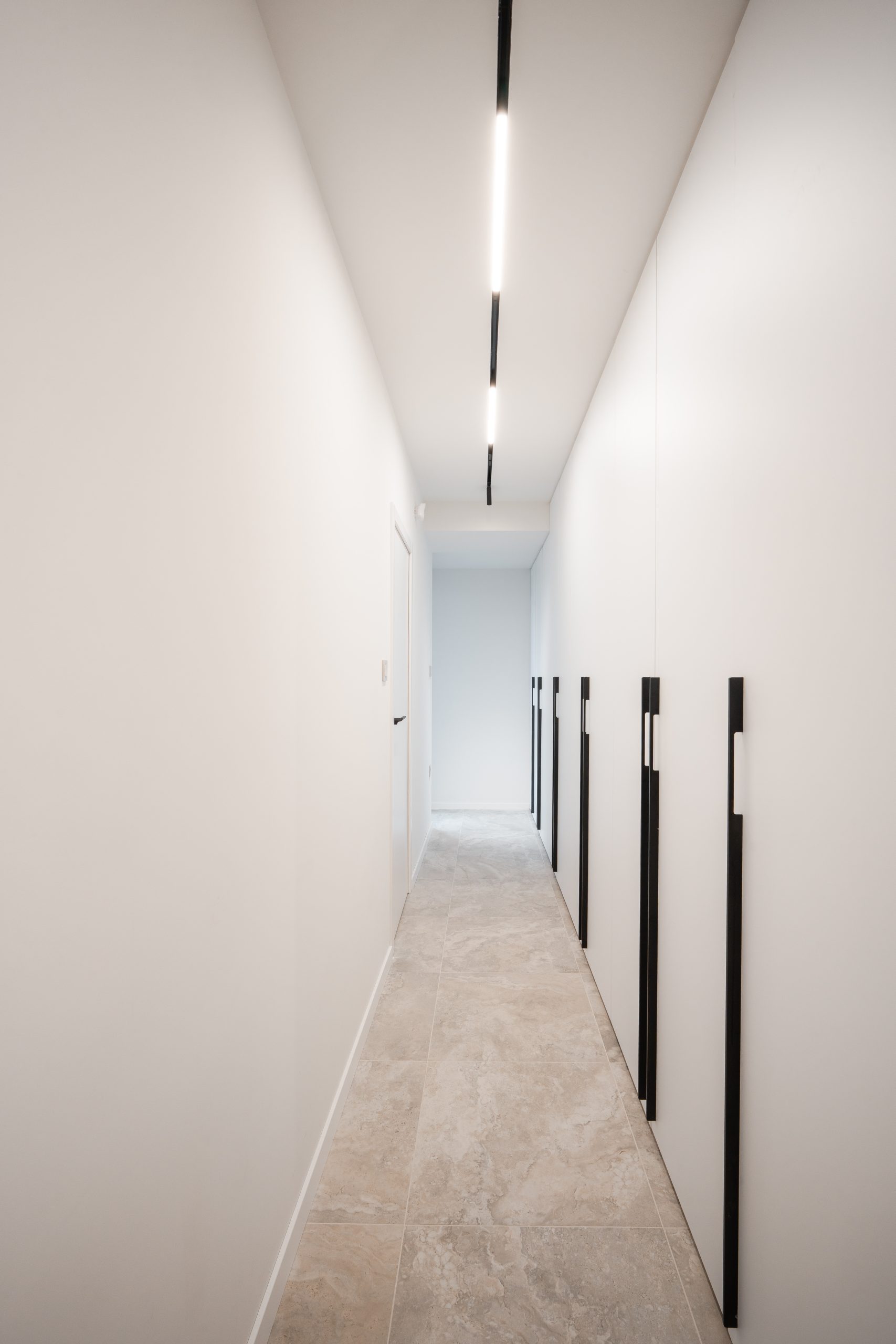
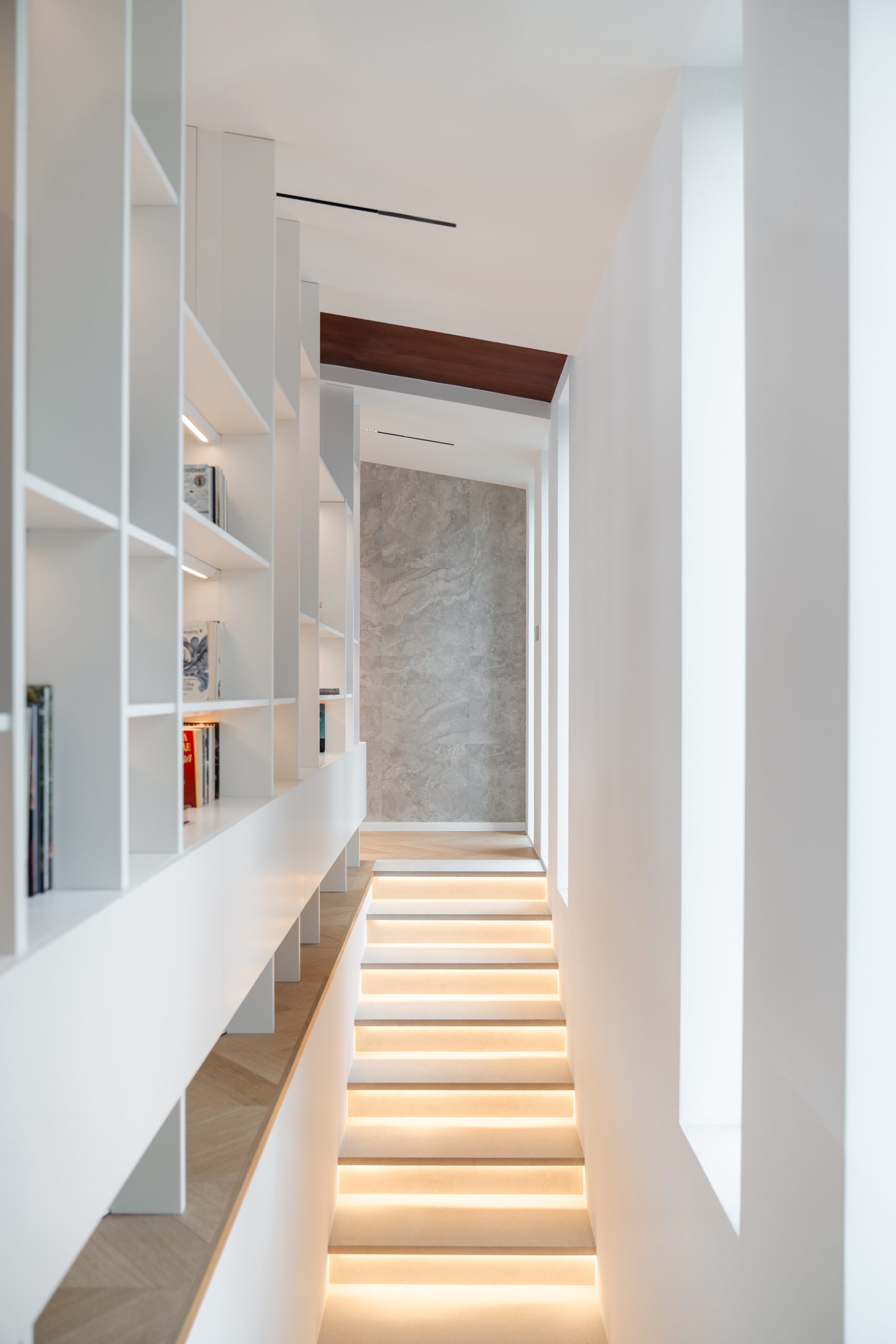
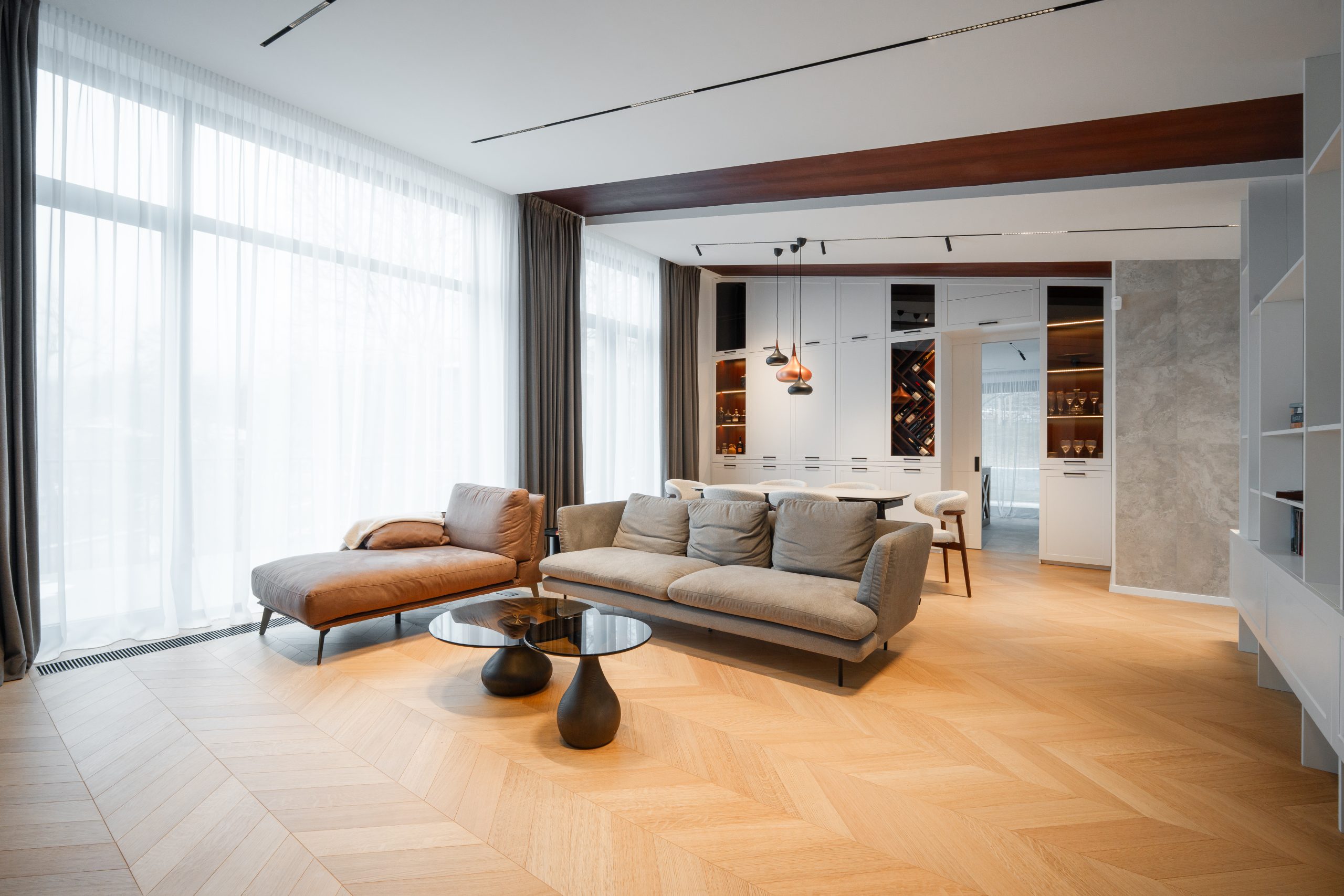
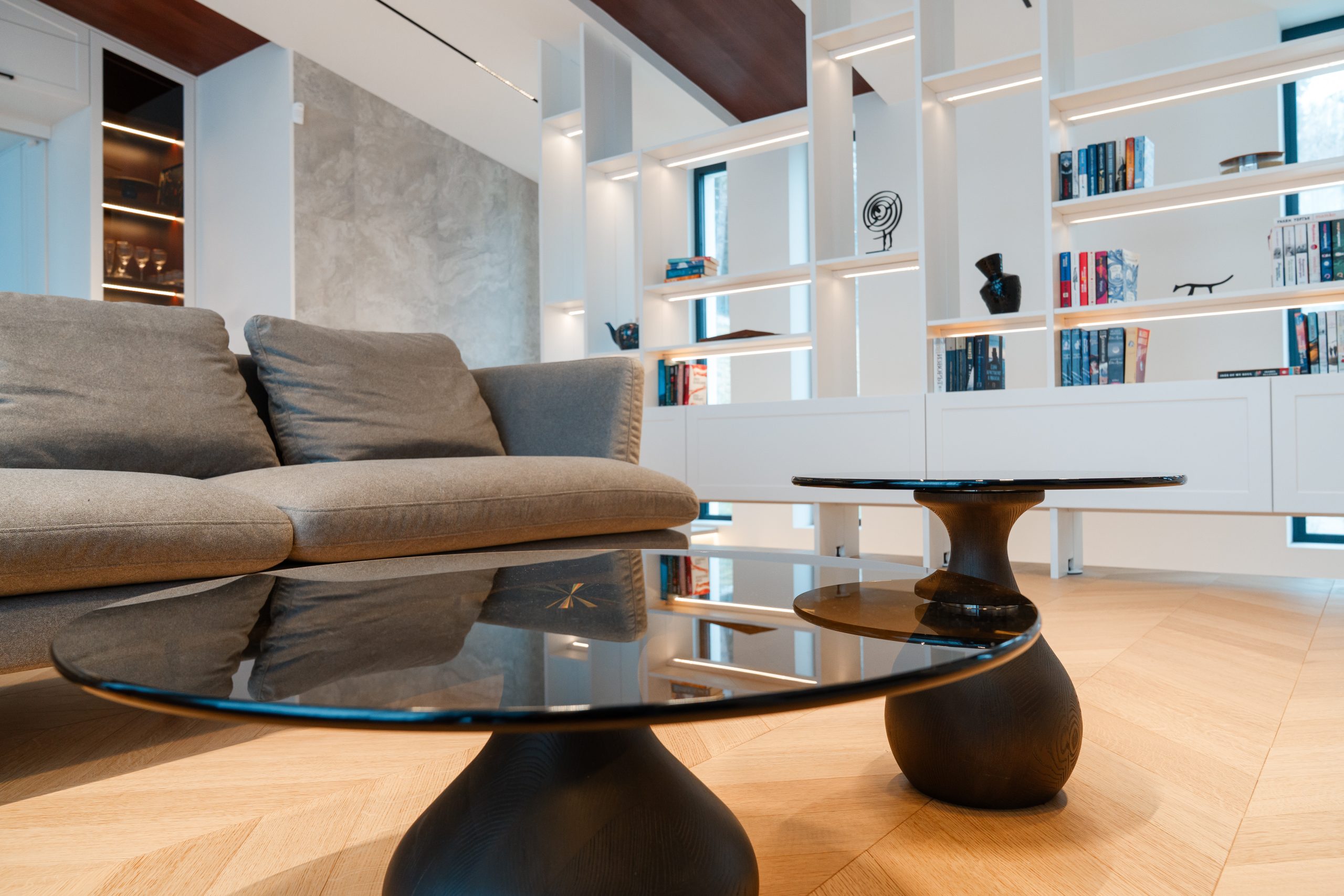
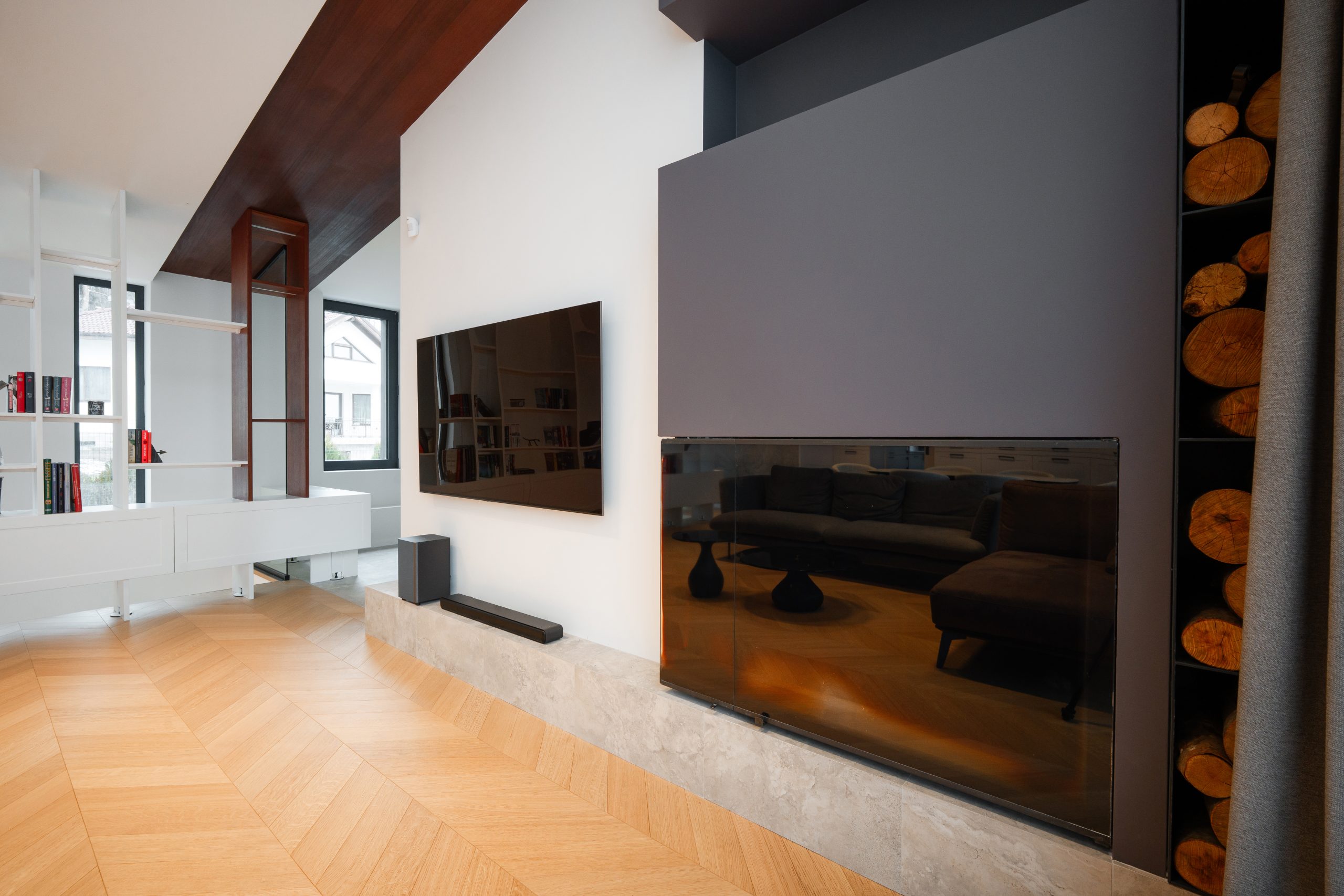
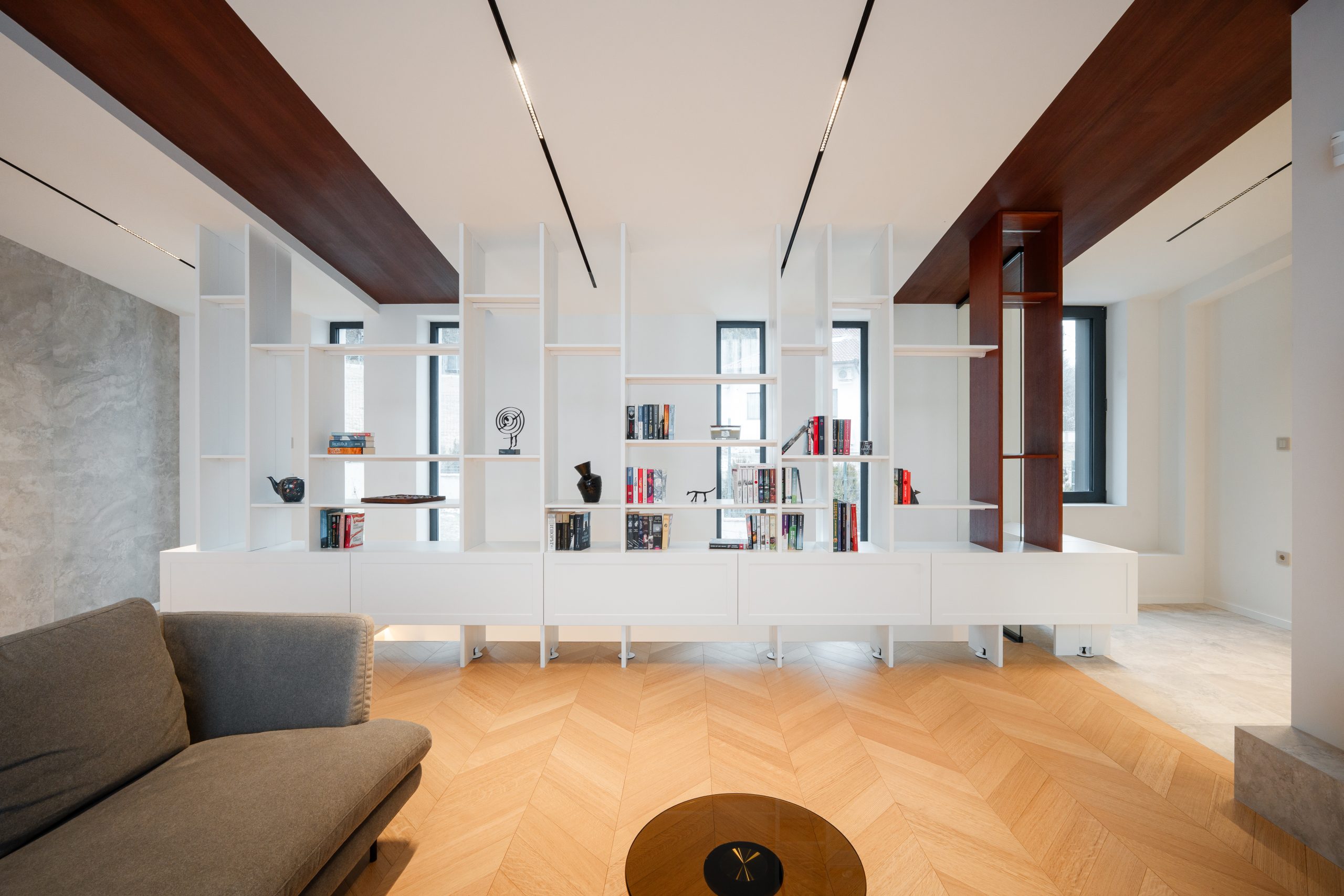
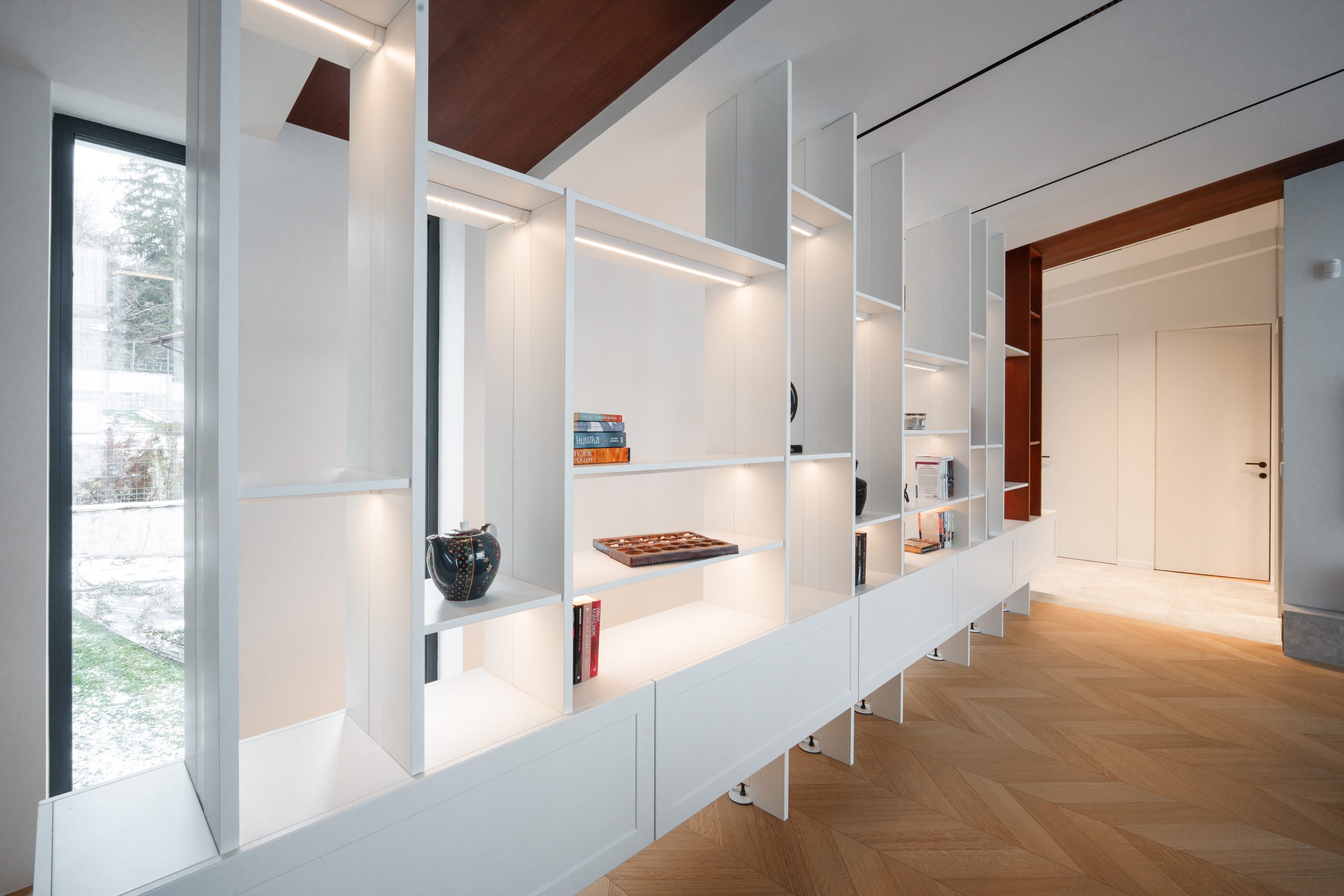
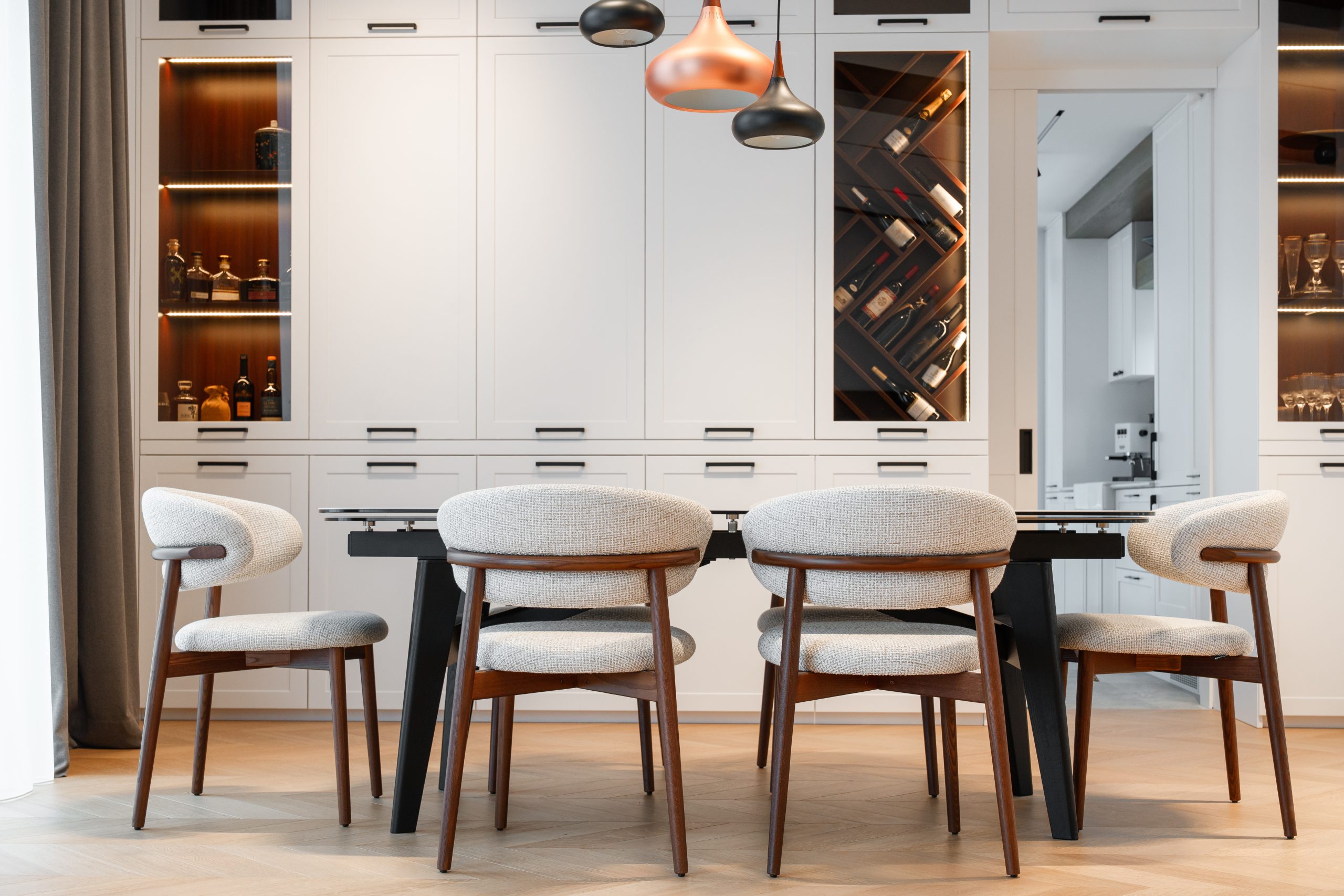
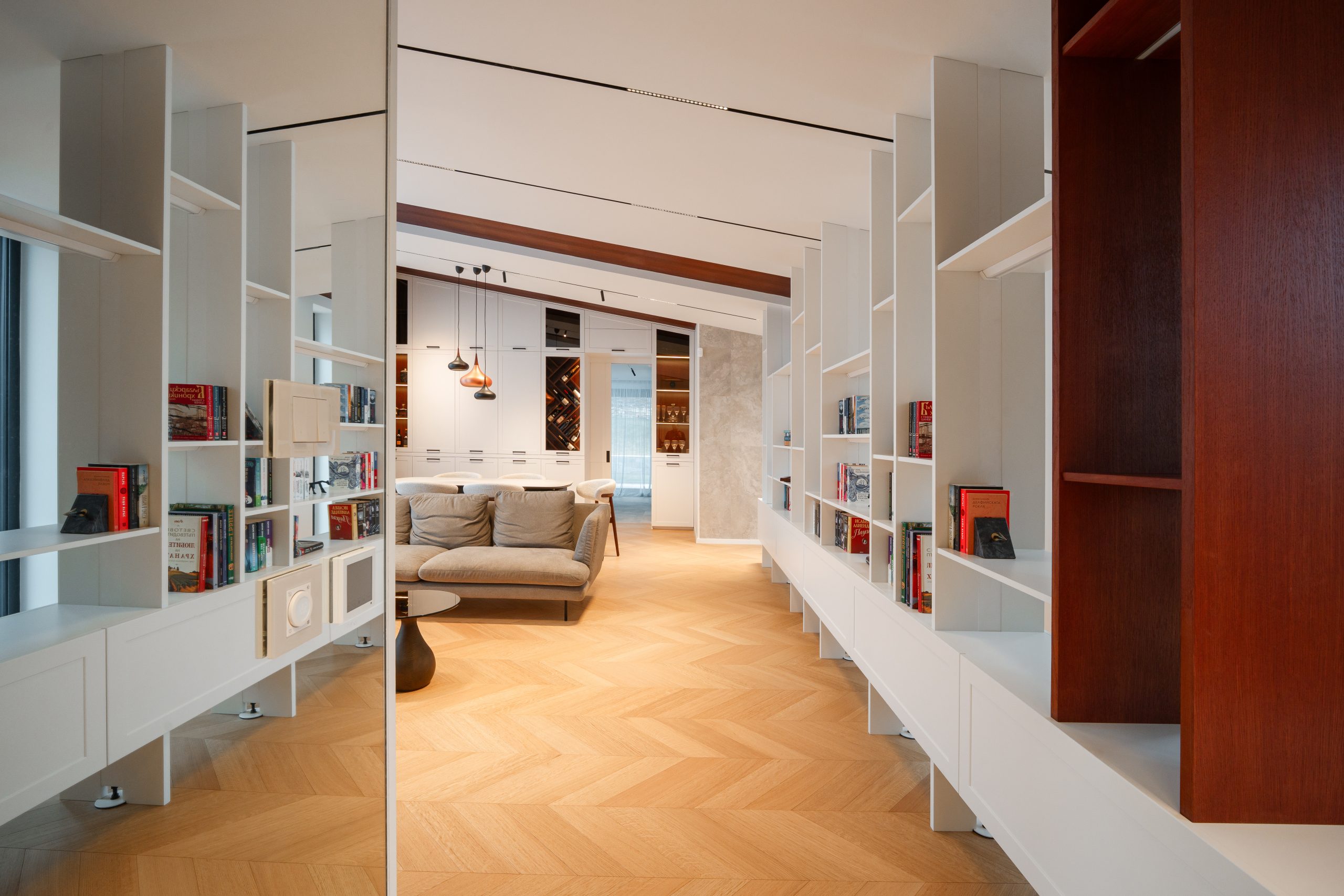
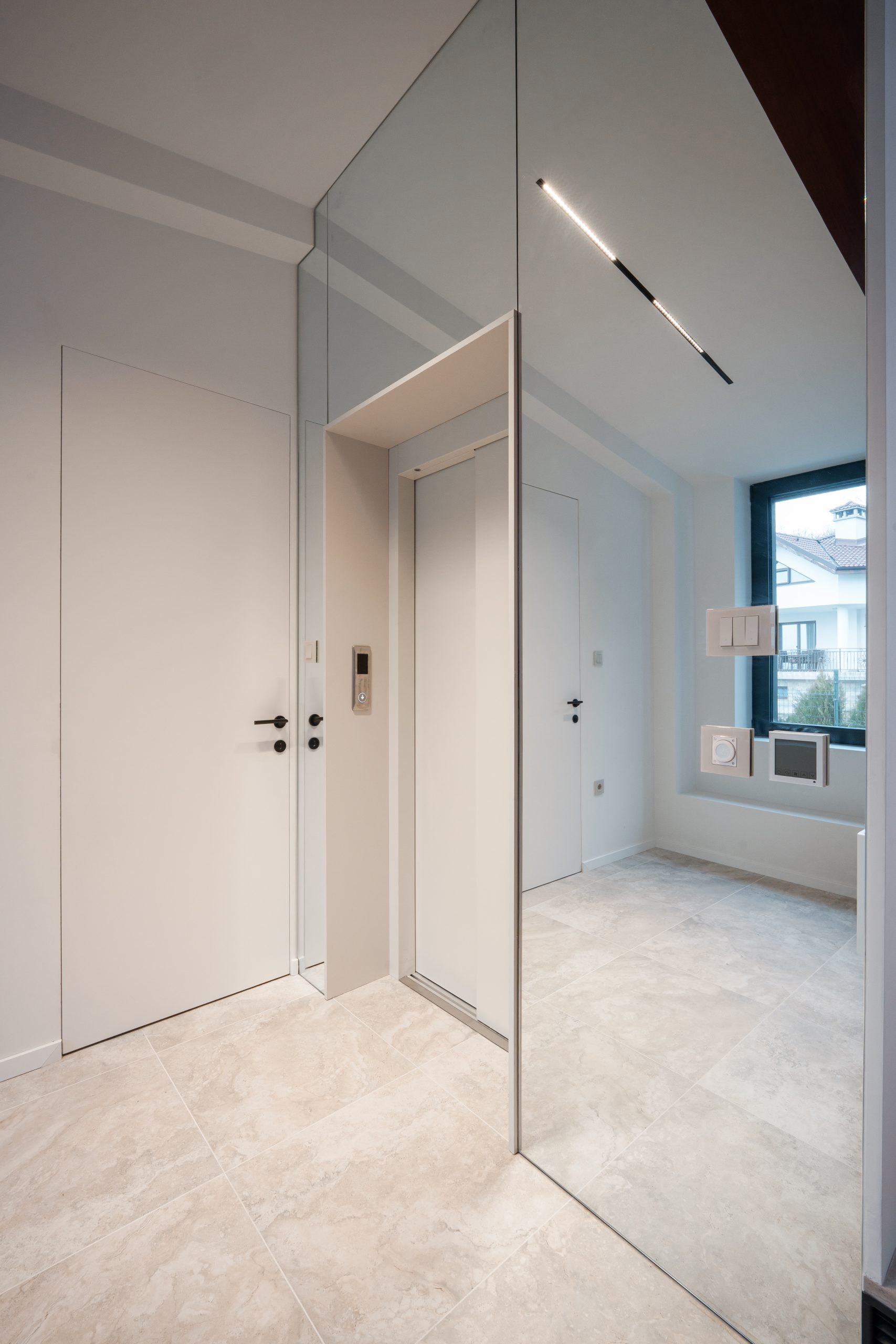
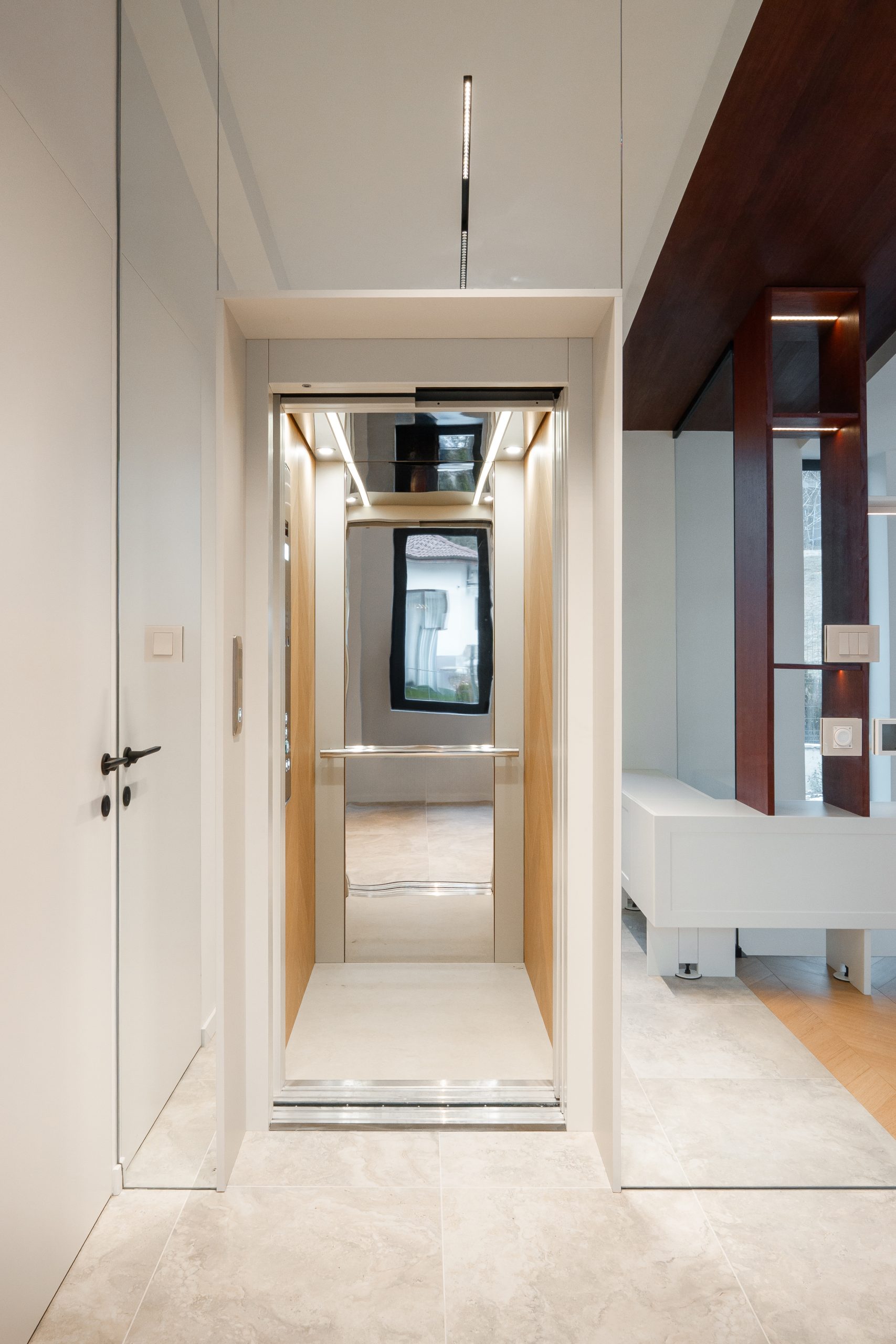
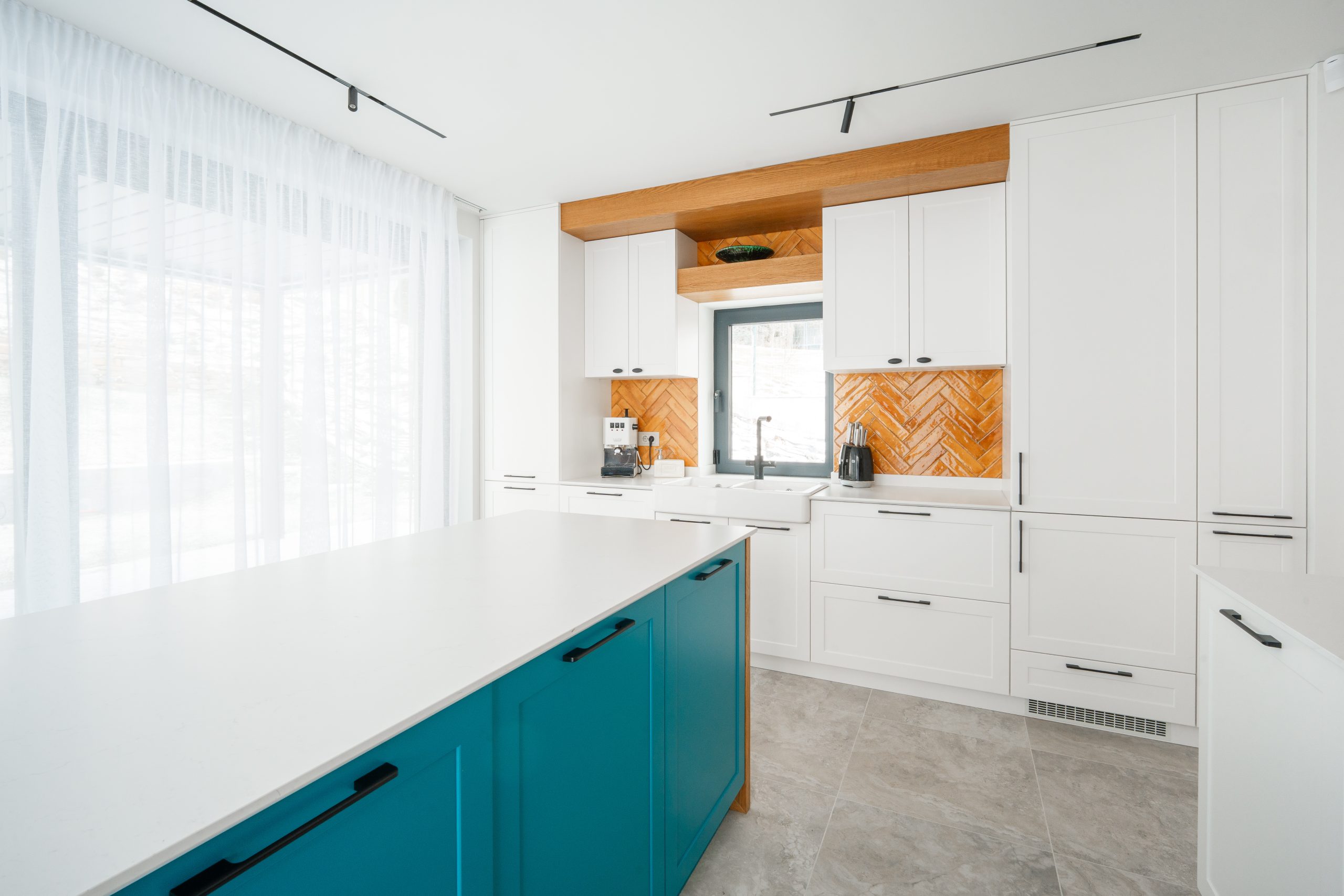
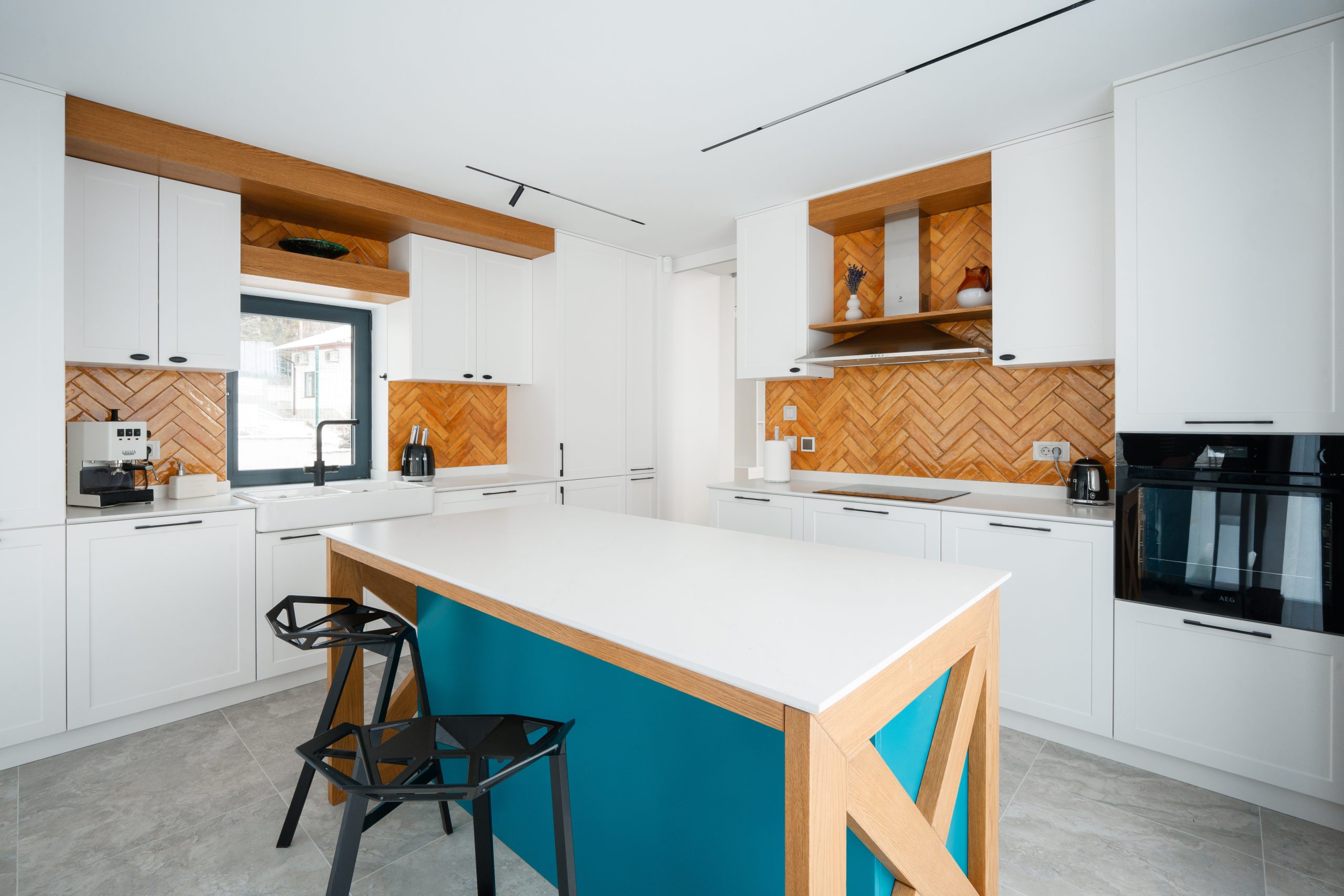
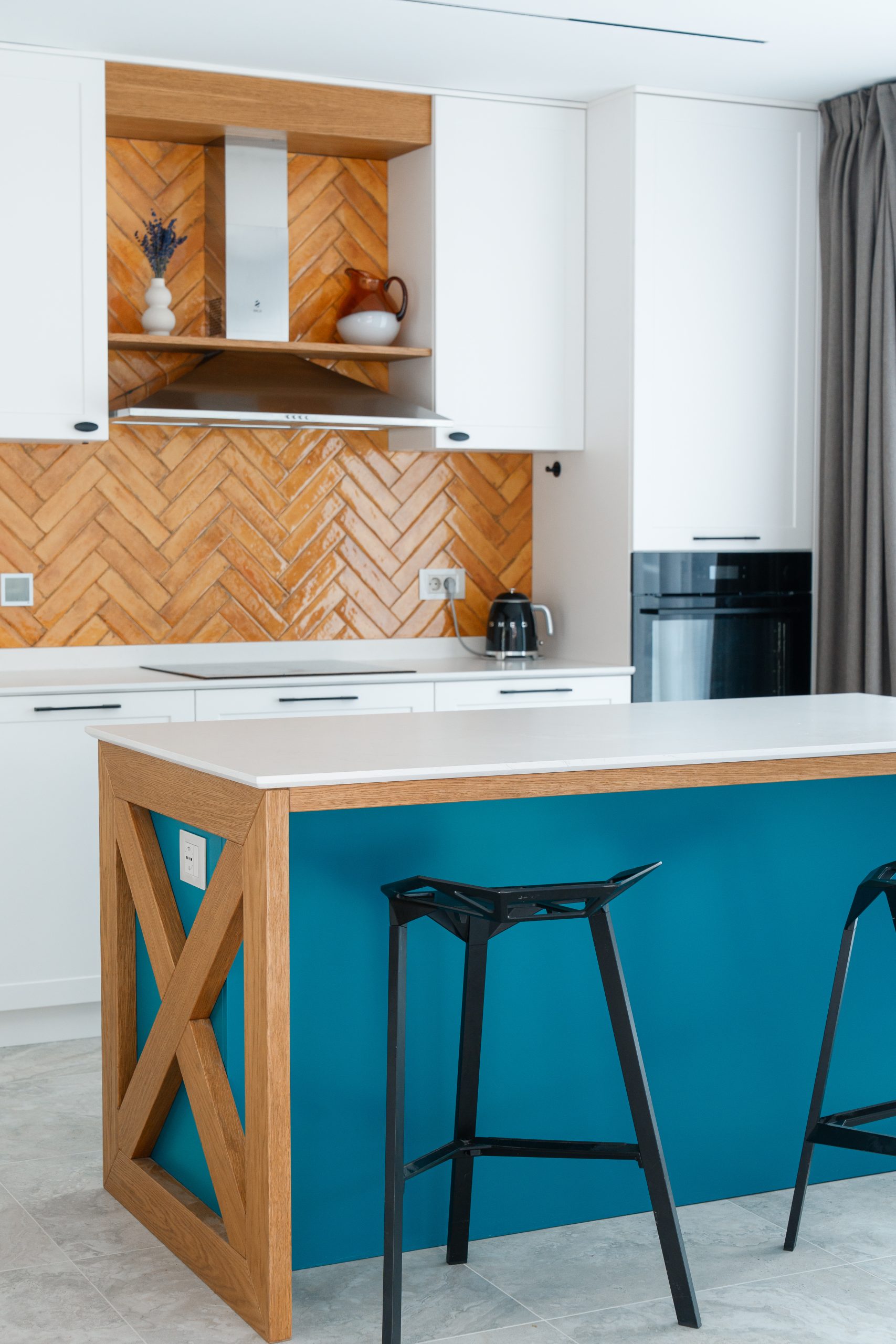
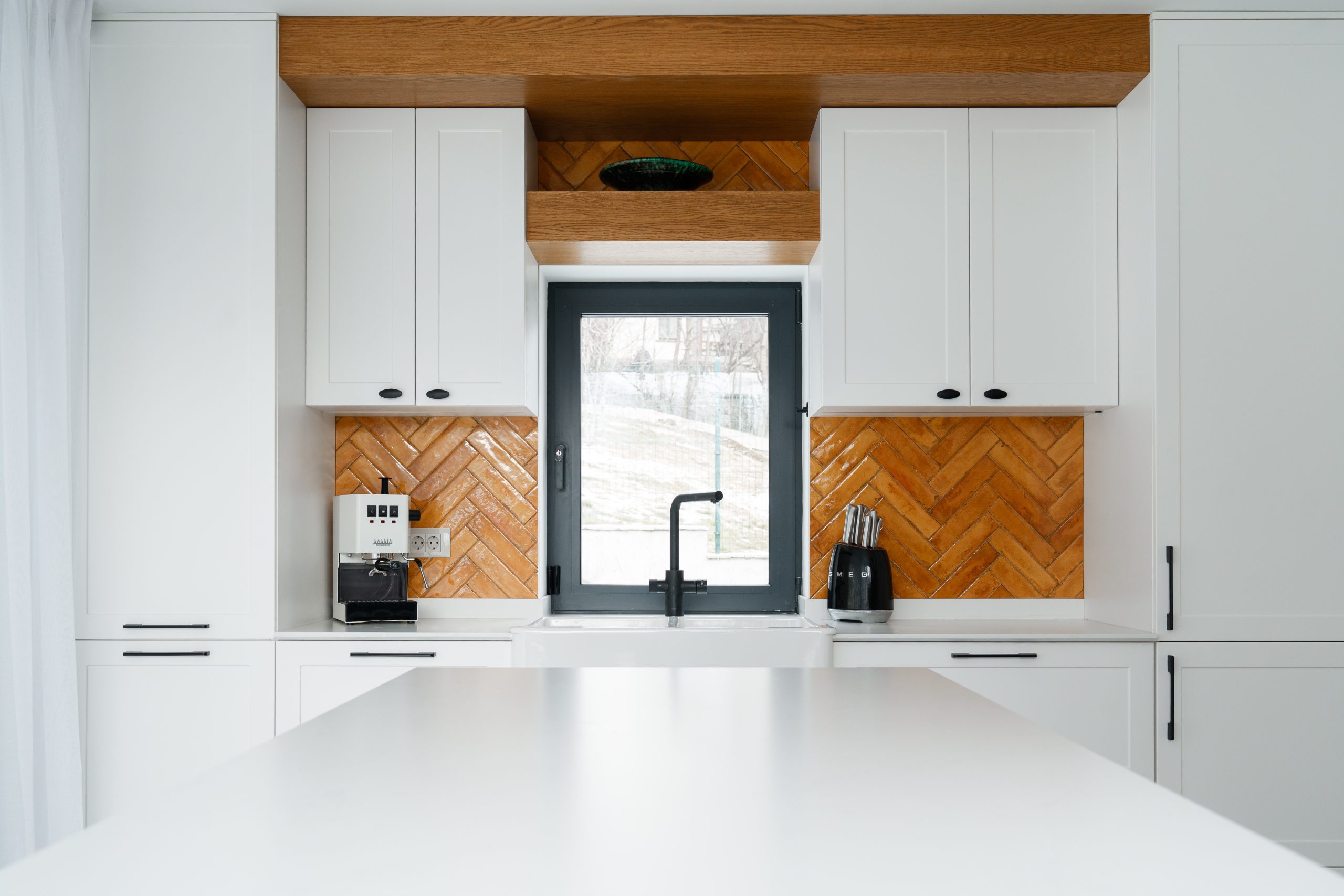
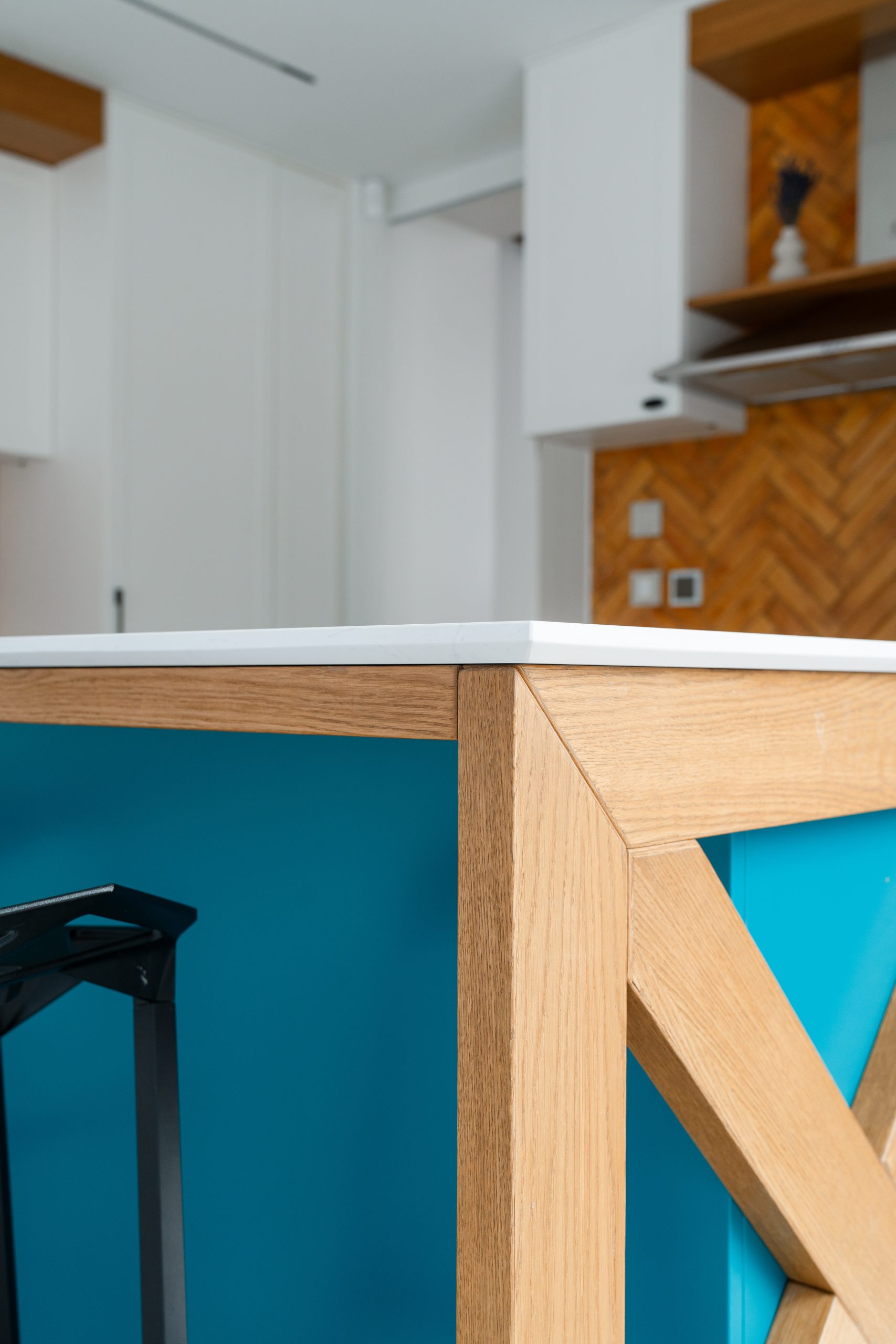
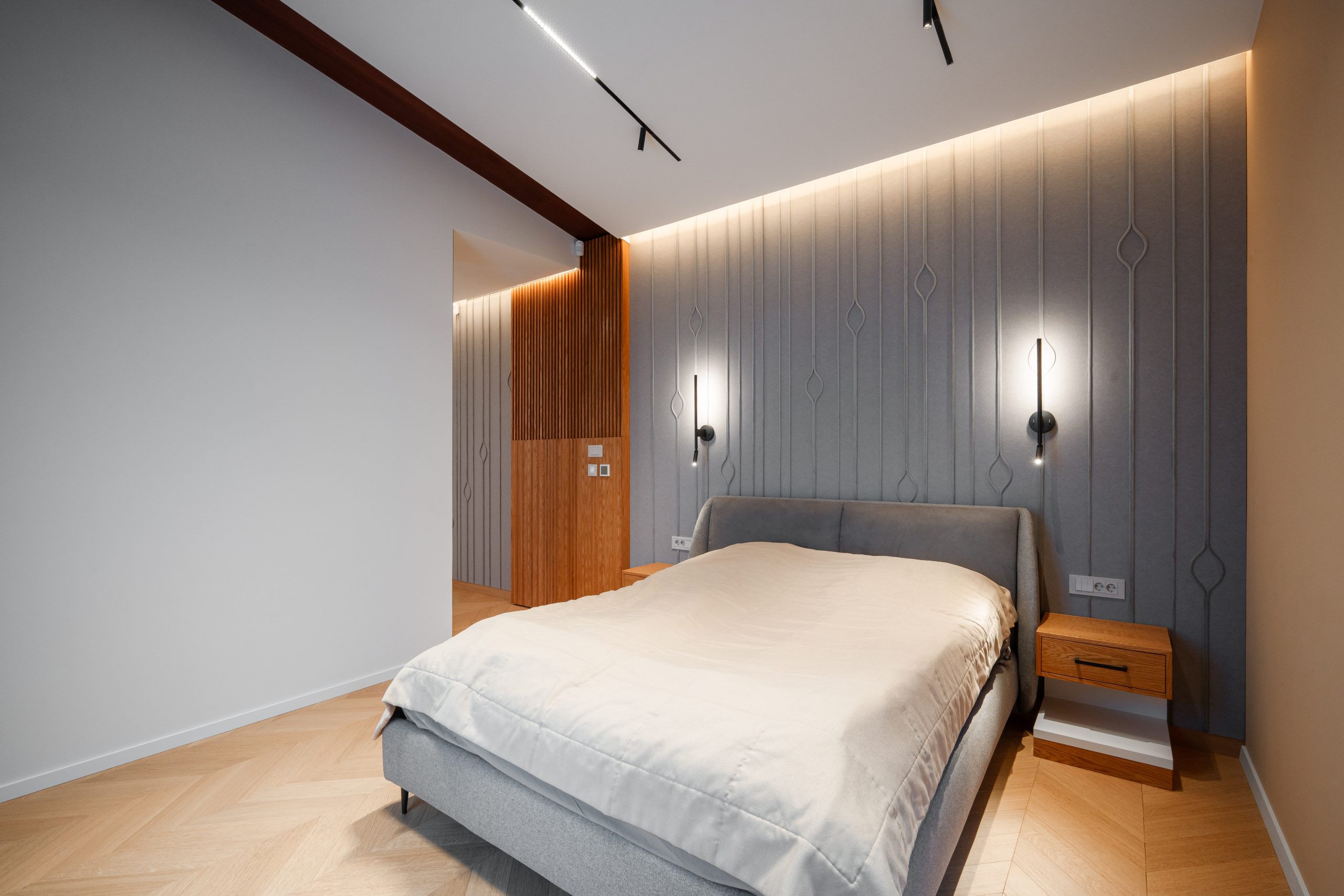
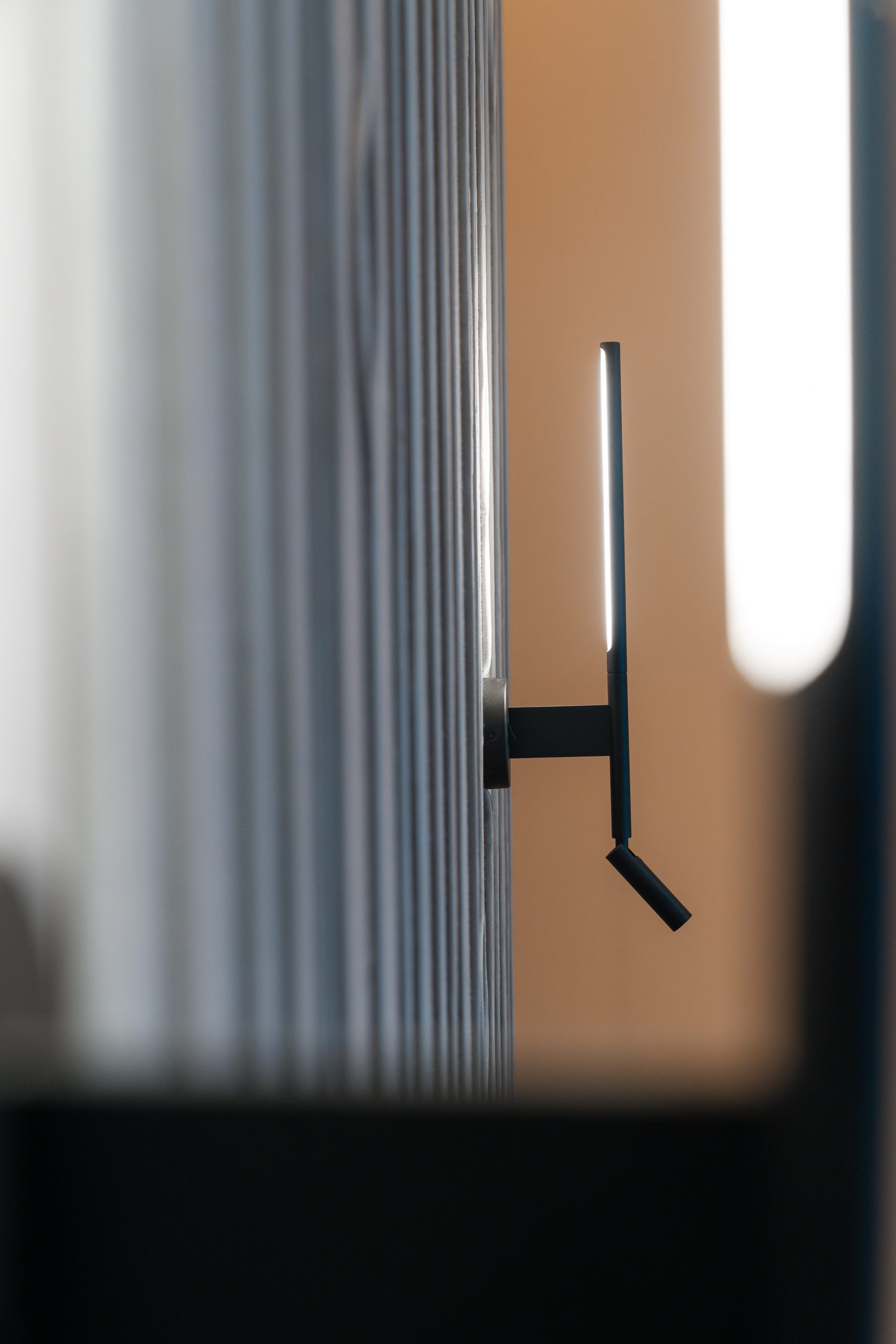
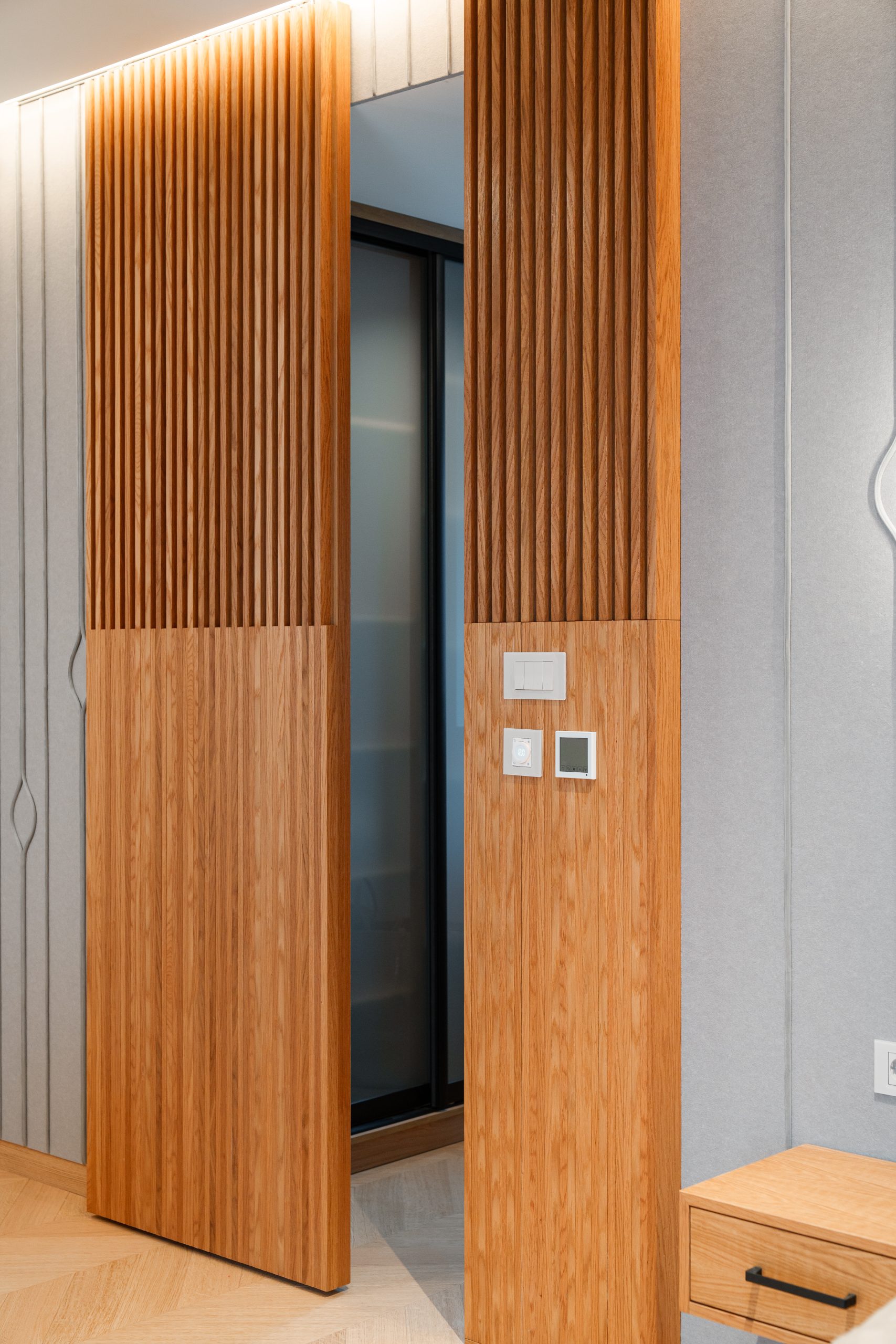
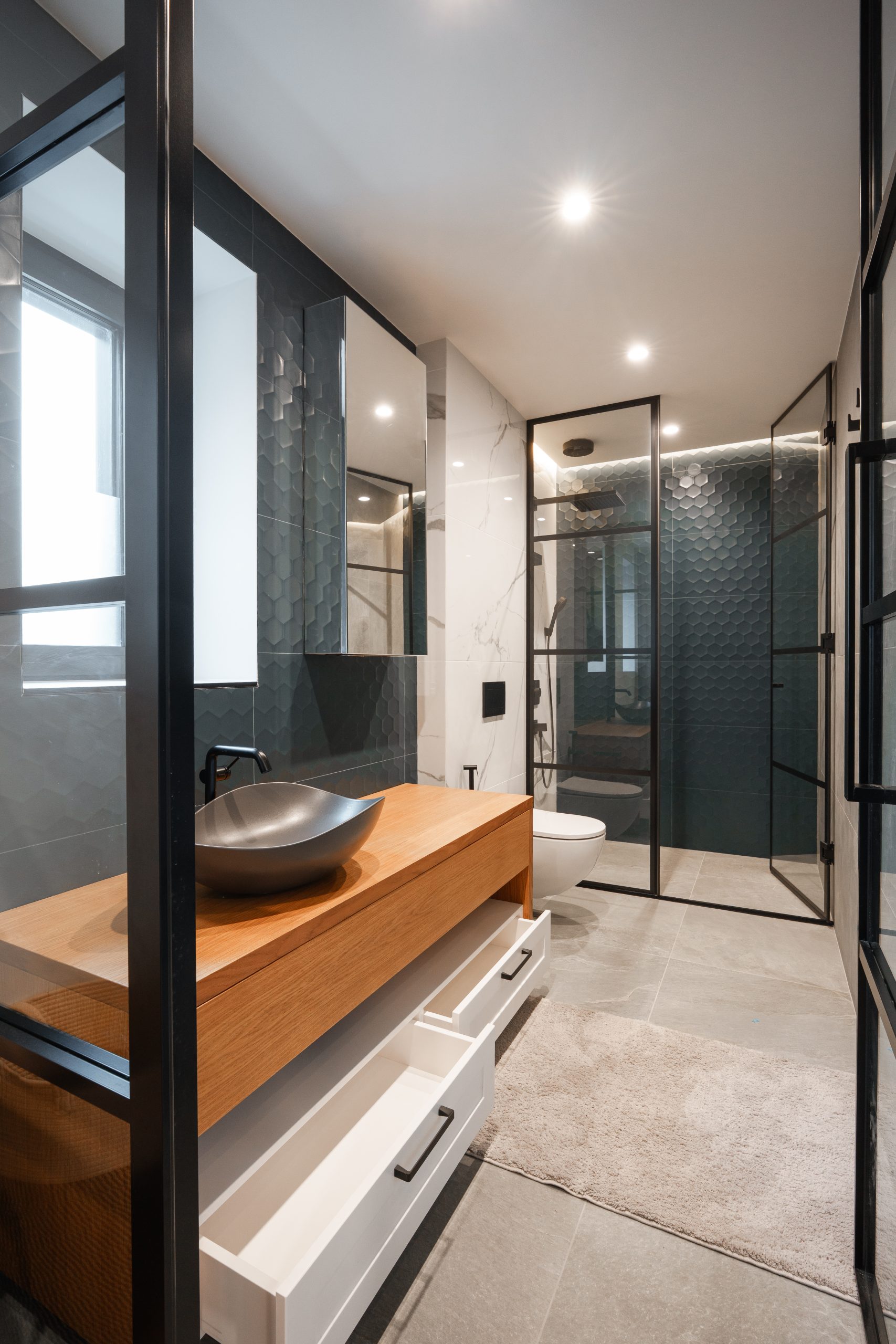
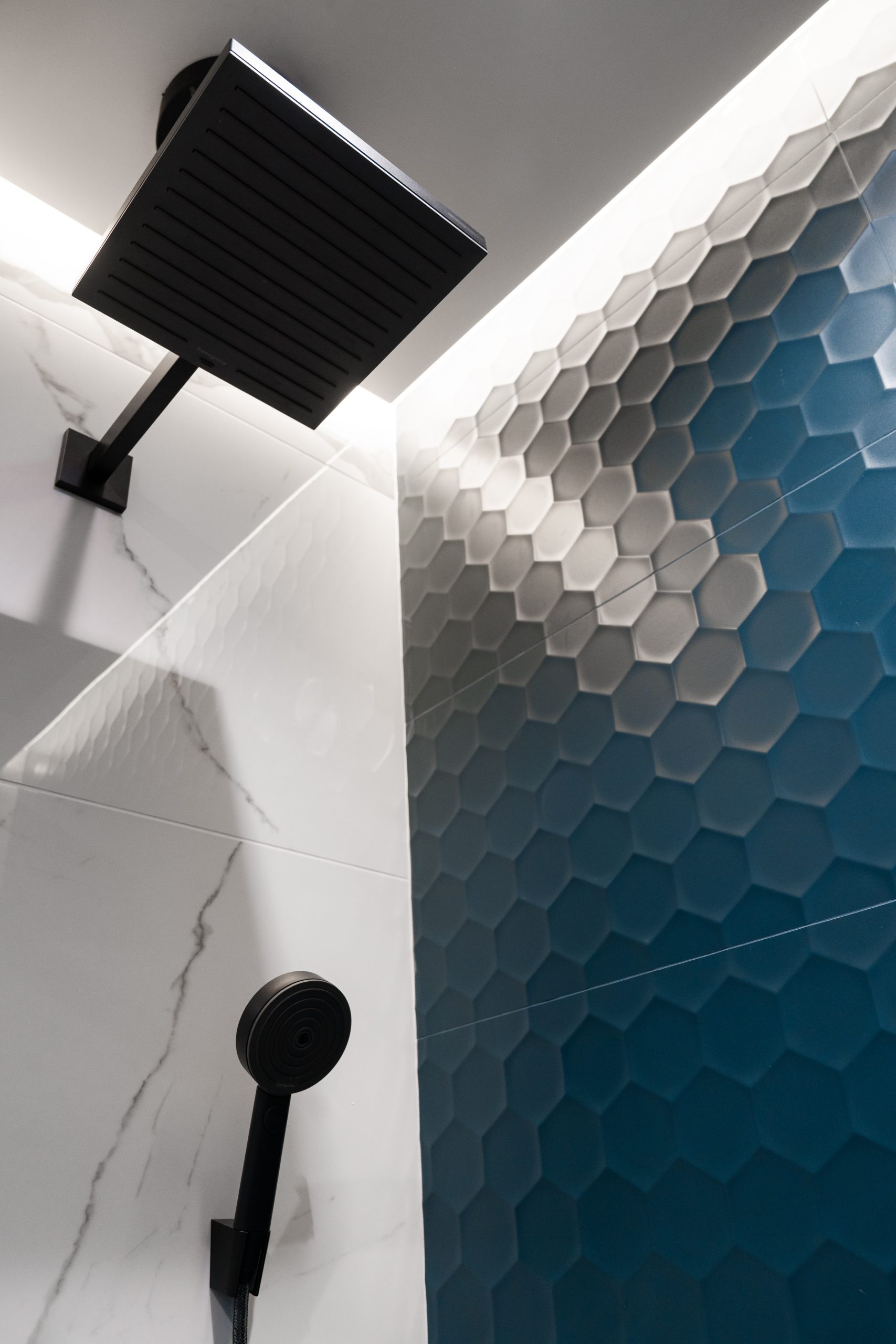
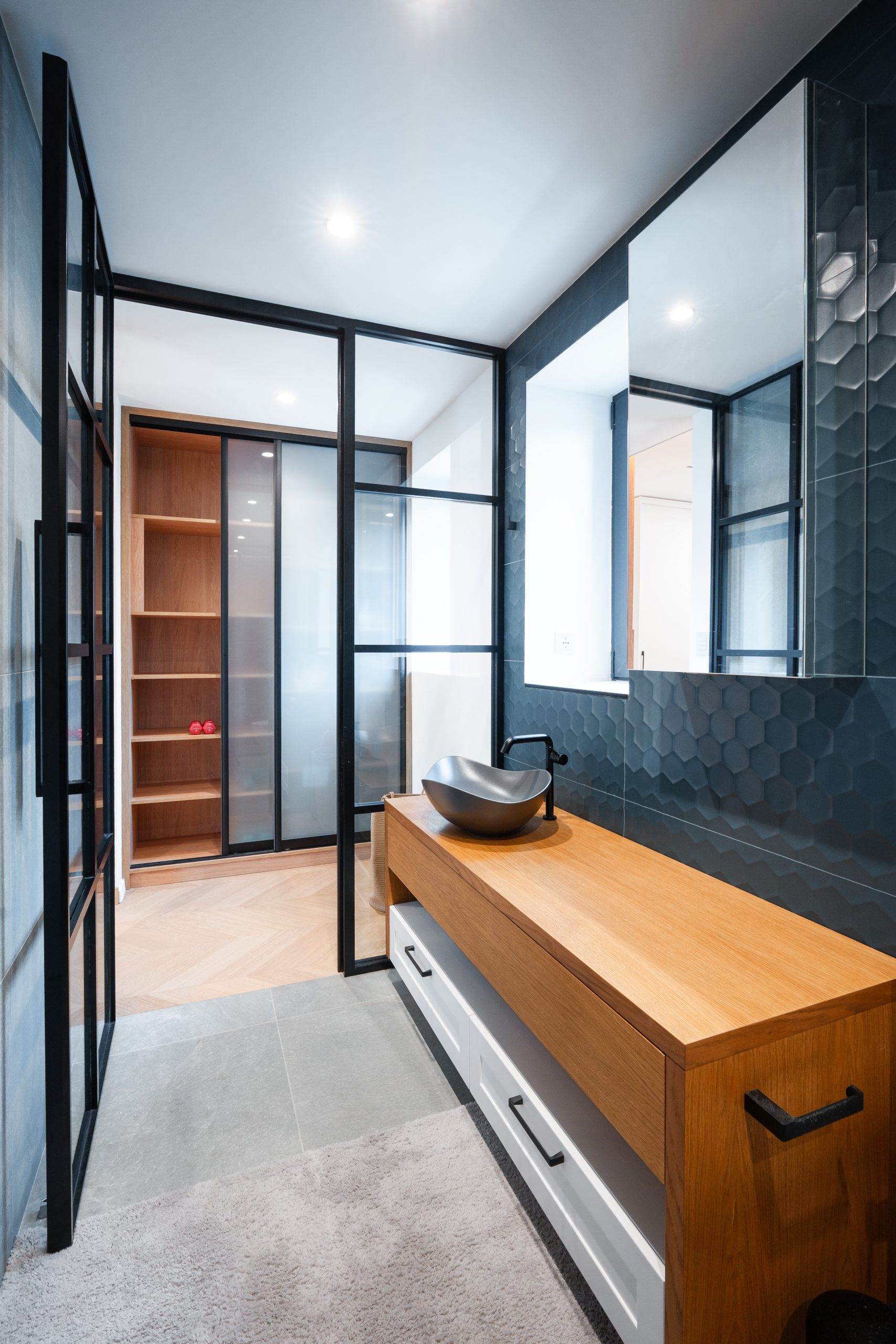
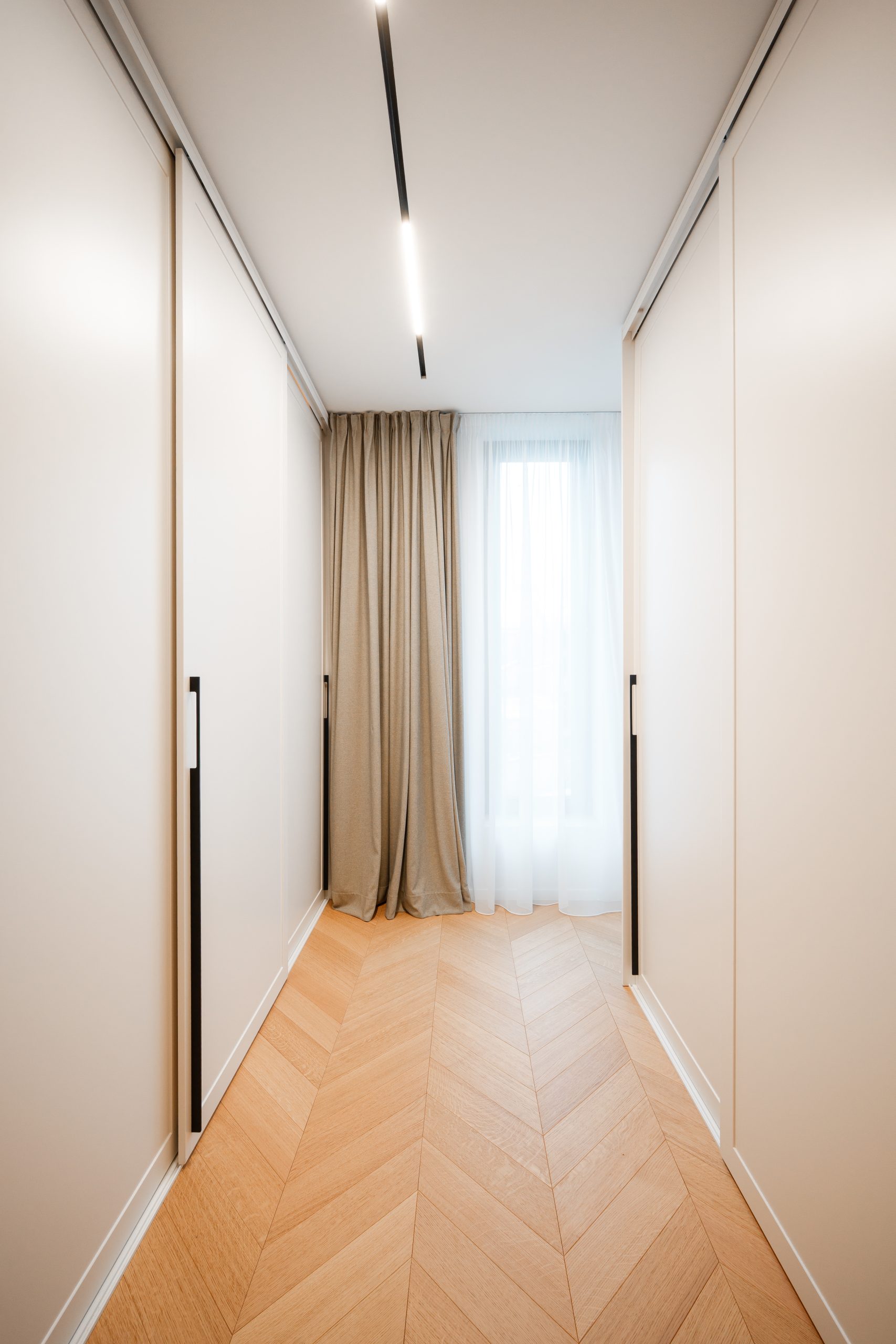
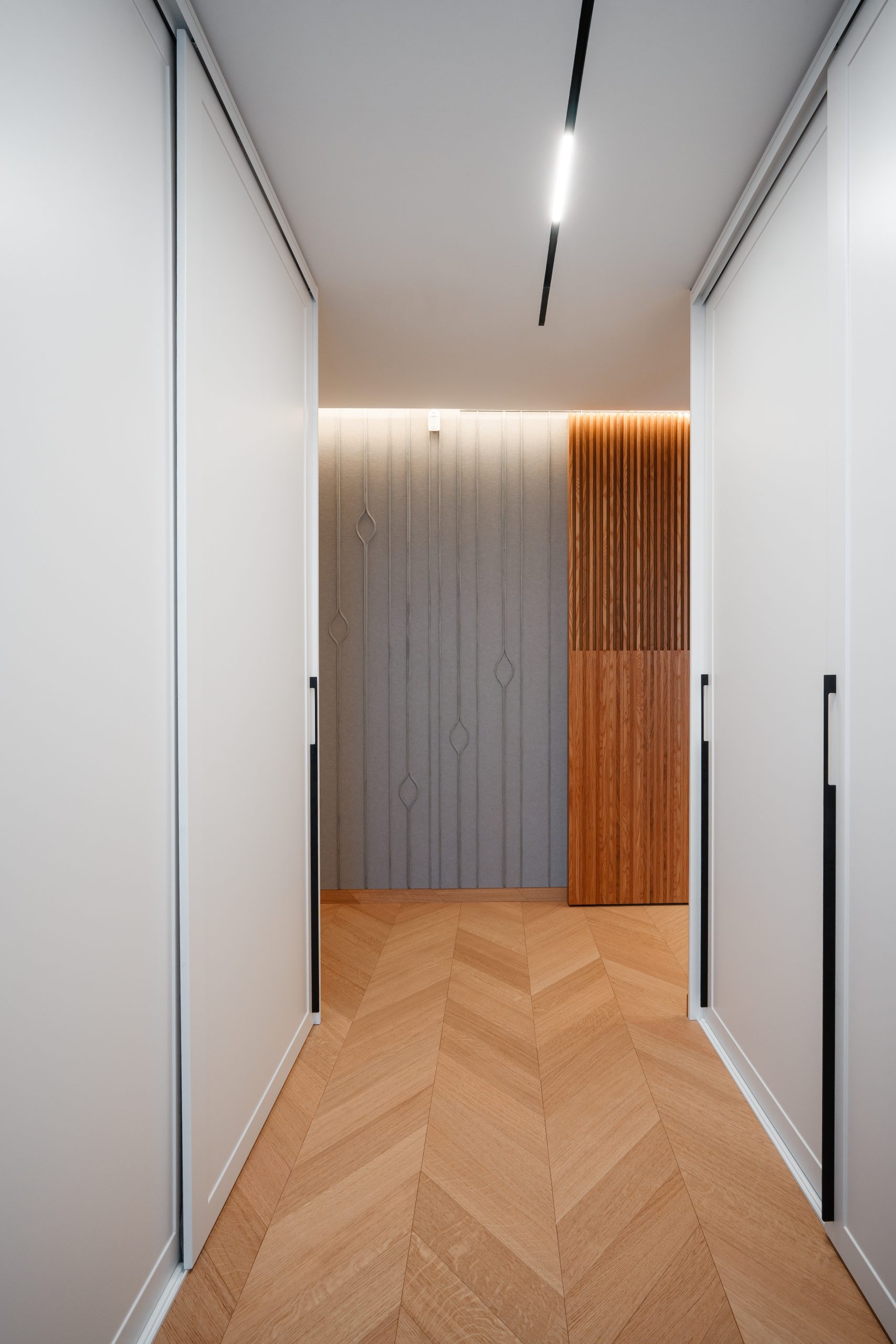
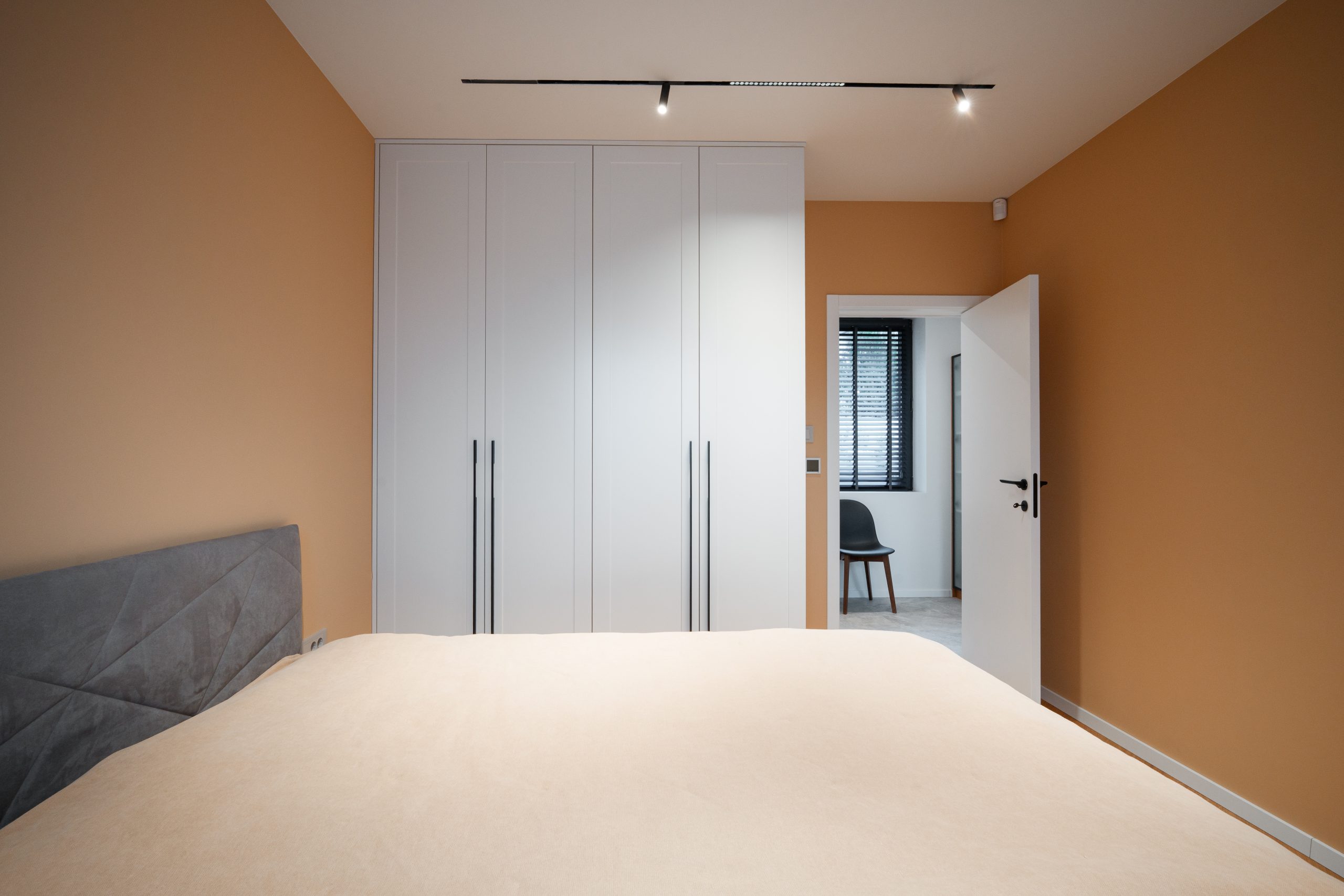
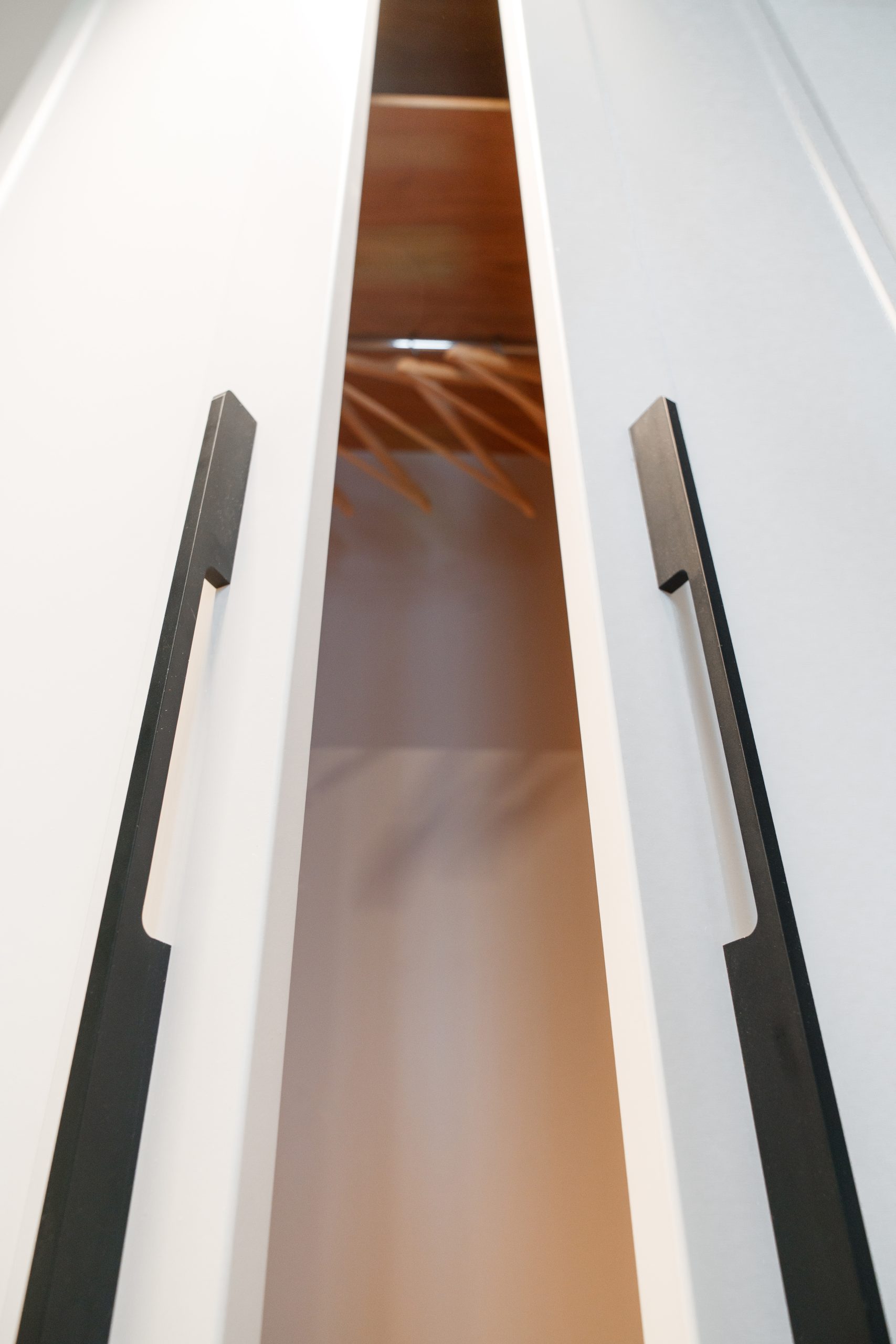
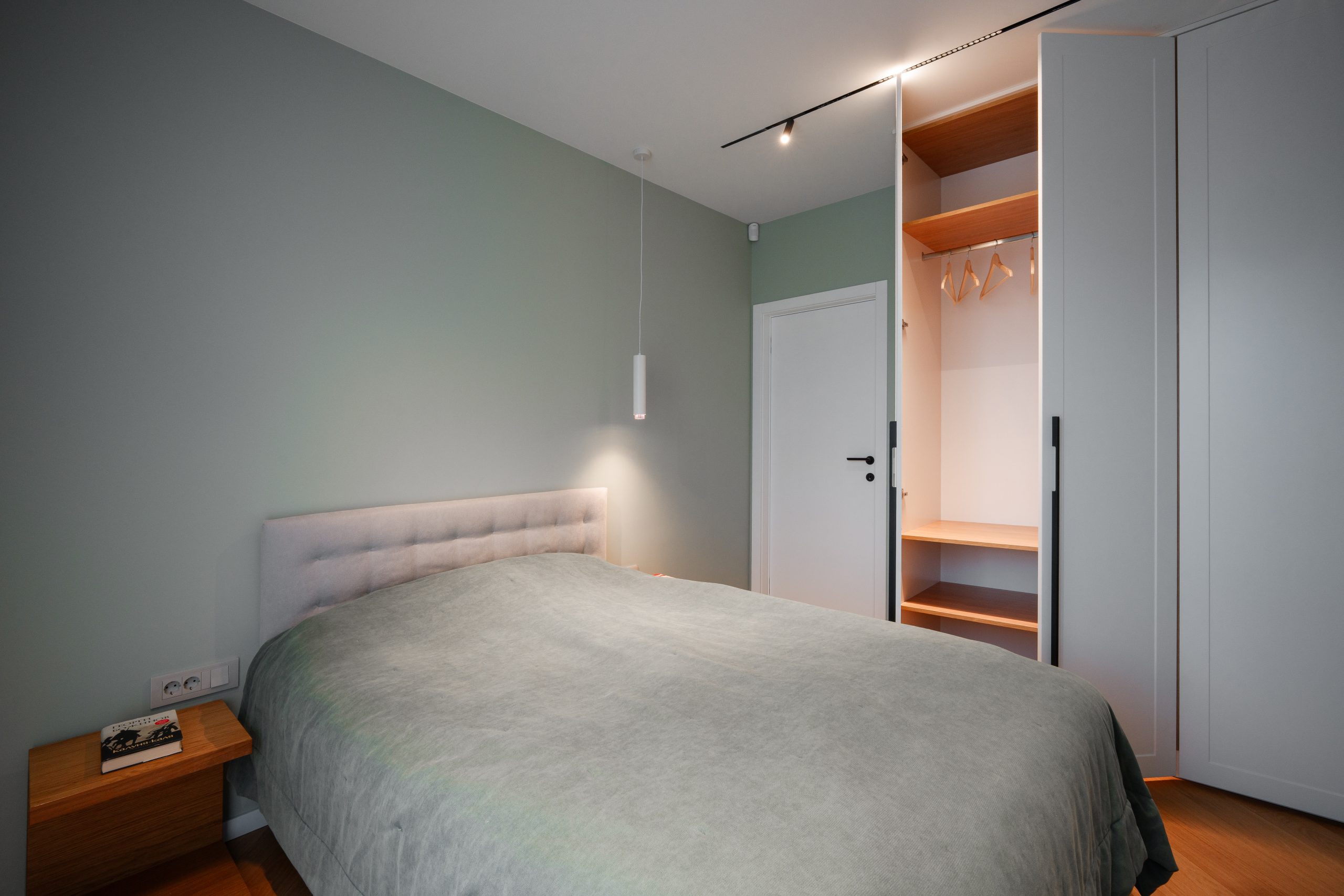
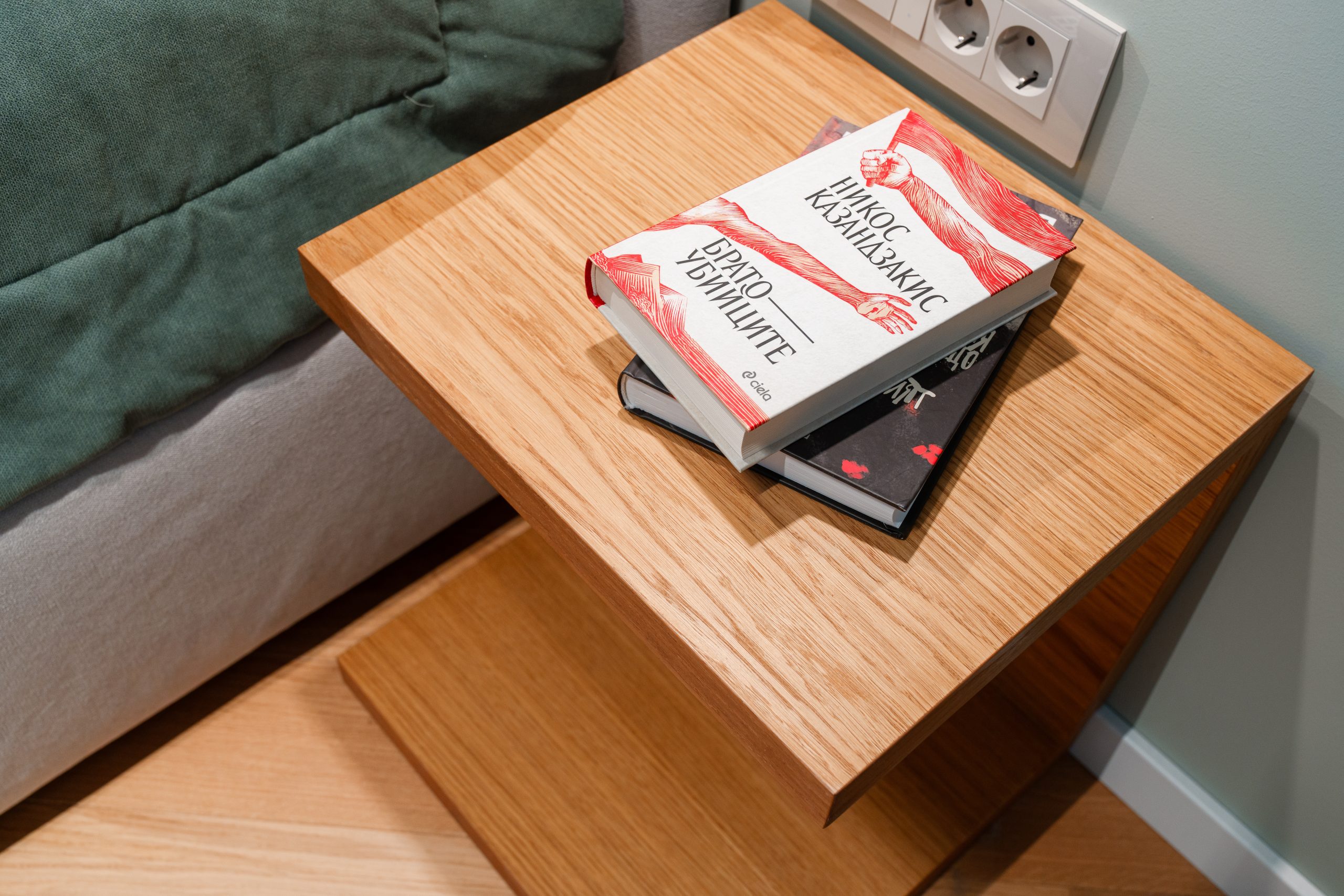
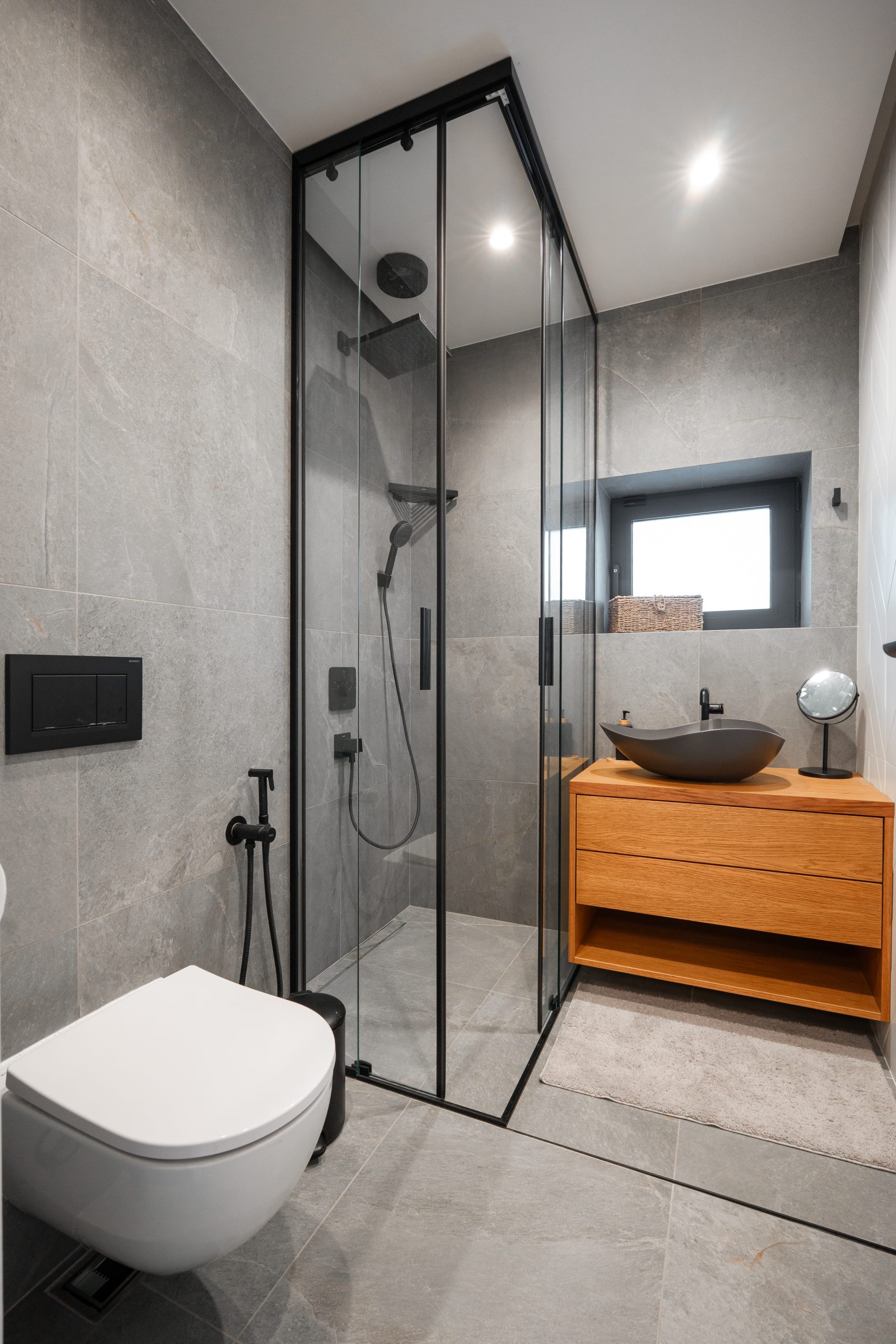
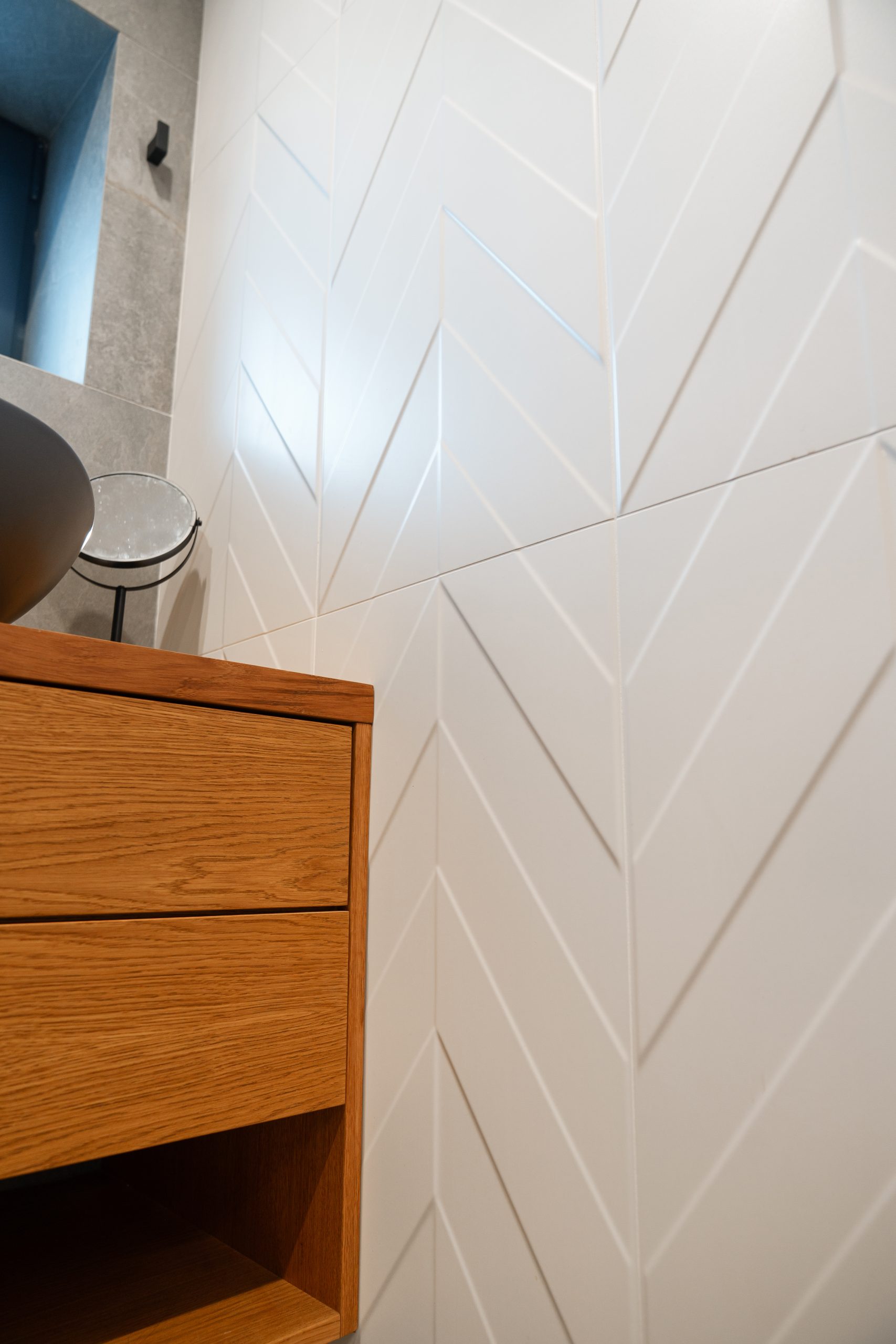
In this project, architecture transcends mere structural necessity and becomes a language that orchestrates movement and experience. The space does not reveal itself all at once; instead, it unfolds as a carefully calibrated sequence of scenes—an essay in geometric clarity and tactile richness. The guiding philosophy is one of restrained expression, where every detail contributes to a larger narrative. The interior journey begins at the north entrance—a strategic decision that takes advantage of the building’s orientation to create a sense of anticipation. Here, the elevator emerges as a monolithic object, both a sculptural volume and the building’s “spine,” organizing vertical circulation between levels. Its frontal placement establishes a clear axis of movement, while the service zone unfolds discreetly to the south. Rather than a conventional entrance hall, the space is conceived as a precise linear composition. To the right, bespoke furnishings are integrated as architectural inserts, combining mirrored surfaces with rhythmic vertical articulation. More than a storage solution, this composition becomes a play of reflections that visually expands the volume and prepares the senses for the scale of the levels beyond. To the left, the transition toward the guest bedrooms and bathroom remains understated, deliberately subordinated to the primary spatial axis. The first floor is a celebration of open-plan living and natural light. Expansive floor-to-ceiling glazing dissolves the boundary between interior and exterior, transforming the southern exposure into a living backdrop. The space is organized into three principal zones, all responding to the dynamic geometry of the sloped ceiling. At its center lies the living area—a composition of sofas oriented toward the fireplace and television. The dining space is defined by an elegant table and chairs, framed by a solid wall incorporating bespoke cabinetry. An Italian shelving system functions as a semi-transparent partition, separating the staircase and elevator without interrupting the flow of light. Acting as a sculptural focal point, it transforms the wall into a dynamic architectural feature. To the west, the kitchen is conceived as a sculptural monolith positioned between two contrasting conditions: the solidity of textured walls and the transparency of full-height glazing that opens onto the generous terrace. The turquoise kitchen island serves as a vibrant focal point, balancing the minimalism of white cabinetry and composite stone surfaces. A concealed sliding door ensures a seamless transition between culinary activities and social interaction. To the east, the primary bedroom is designed as a tranquil retreat, characterized by soft textures and a restrained, neutral palette. Its most intimate feature is the concealed en-suite bathroom, integrated within the overall volume and articulated as an architectural statement. The transition is fluid, with ceramic surfaces and glass meeting timber in a seamless composition that transforms the space into a sensory experience. The project seeks to balance the clean lines of contemporary design with the refinement of crafted detail, creating an environment that is both highly functional and deeply inspiring. The concept was developed by Workbox Studio, while MRG Design was responsible for the technical execution, including the fabrication and installation of all wall claddings and bespoke furniture elements.